
There are two primary circlip plier actions: internal pliers compress a ring’s tips to seat it inside a bore, and external pliers expand a ring’s tips to slip it onto a shaft. The rule is simple. Check where the circlip sits before you touch a tool. Everything else, from tip shape to jaw size, follows from that one decision.
TL;DR:
- Using the wrong circlip plier action can cause damage to the ring or tool, so always identify whether the ring sits inside a bore or outside on a shaft.
- Internal pliers should be used for rings within bores with tips that are hardened and properly sized to avoid slipping or gouging.
- External pliers expand rings around shafts, and tips must match the ring’s diameter and hole spacing to prevent slipping or deformation.
- Specialty tools like ratcheting and multi-tip sets are recommended for frequent use or large rings, offering better durability and versatility.
- Proper technique involves testing fit, applying steady pressure, and confirming the ring is fully seated to prevent slips and safety hazards.
Table of Contents
- What Are Circlip Pliers Types and Why the Action Matters
- Internal Circlip Pliers: Tips, Sizes, and Safe Technique
- External Circlip Pliers: Tips, Sizes, and Safe Technique
- Matching Tip Styles and Sizes to the Job
- Heavy-Duty, Ratcheting, and Convertible Circlip Pliers
- How to Use Circlip Pliers Step by Step
- How to Choose the Right Circlip Pliers
- Teng Tools in the Catalog: Matching Products to Real Jobs
- The Real Skill Isn’t the Tool, It’s the Diagnosis
- Get the Right Circlip Pliers Without Guessing on Fit
- Sources
- FAQ
What Are Circlip Pliers Types and Why the Action Matters
Circlip pliers go by several names in catalogs and trade counters: retaining ring pliers, snap ring pliers, and C-clip pliers all describe the same core tool. The distinction that actually matters isn’t the name, it’s the action. Internal pliers squeeze the handles to compress the ring’s tips inward, letting you fit a circlip into a bore or housing. External pliers do the opposite. Squeezing the handles spreads the tips apart, expanding the ring enough to clear a shaft.
That mechanical difference isn’t a technicality. It’s the whole job.
You’ll run into these rings constantly in bearing assemblies, gearboxes, and axle housings, where a circlip keeps a bearing race or a shaft collar from walking out of position under vibration. Grab the wrong action and you’ll either fight a ring that won’t budge or watch it fly across the shop when it slips off the tips.
A few things go wrong more often than techs expect:
- Using external pliers on an internal ring (or vice versa), which stresses the tips and can bend or snap them
- Forcing undersized tips into a ring’s holes, which chews up the ring and the tool
- Skipping eye protection, since a ring under tension can launch when it slips
Get the action right first. Tip style and size are secondary decisions once you know whether you’re compressing or expanding.
Internal Circlip Pliers: Tips, Sizes, and Safe Technique
Internal circlip pliers are built for one job: reaching into a bore, housing, or recessed groove and compressing a ring so it seats flush in its channel. Squeeze the handles, the tips draw inward, and the ring shrinks just enough to drop into place or lift free for removal.
Tip geometry decides how far you can reach. Straight tips work fine on rings sitting near the opening of a housing, but anything recessed deeper, like a circlip inside a pump body or a small gearbox, usually needs bent or angled tips to clear the housing wall and still land square on the ring’s holes.
Size matters just as much as reach. Miniature internal pliers with narrow, tapered tips handle small-diameter rings in electric motors and precision assemblies. Standard sizes cover most automotive and general repair work: alternator housings, transmission components, and bearing retainers. For larger industrial bores, you’ll want a plier rated for the ring diameter, not just one that happens to fit the holes.
Tip finish counts too. Hardened, precisely machined tips seat fully in the ring’s holes without slipping or gouging the metal. Soft or worn tips round out over time and start camming out of the holes under pressure, which is exactly when a ring gets damaged or a knuckle gets skinned.
Pro Tip: Before you compress a ring, test-fit the tips in the holes with light pressure. If they don’t seat fully and square, you’re either using the wrong tip diameter or the wrong tool entirely.
Quick safety notes worth repeating every time:
- Keep your fingers clear of the ring’s path once it’s under tension
- Confirm the ring is fully seated in its groove before releasing pressure gradually
- Never lever the pliers sideways to force a stuck ring; back off and check for corrosion or debris first
External Circlip Pliers: Tips, Sizes, and Safe Technique
External circlip pliers work in reverse: squeezing the handles spreads the tips apart, expanding the ring so it clears a shaft. That’s the tool you reach for on crankshafts, axle shafts, and any component where the ring wraps around the outside of a part rather than sitting inside it.
Access angle drives tip choice here just as much as it does on internal work. Straight tips handle shafts with open, unobstructed access, which covers a lot of automotive and small-engine repair. Bent or angled tips (commonly 30, 45, or 90 degrees) earn their keep when a housing, bracket, or adjacent part blocks a straight approach. Long-nose external tips extend your reach into recessed shaft grooves, like those found deep inside a gearbox casing, without forcing you to disassemble surrounding parts.
Size selection follows the shaft diameter and the ring’s actual dimensions, not a guess. A plier rated for a narrow range of ring sizes will either fail to open the tips wide enough or overextend past the ring’s working limit, both of which risk permanent deformation.
Pro Tip: Expand the ring only as far as needed to clear the shaft. Over-spreading an external ring past its rated capacity is one of the fastest ways to turn a $2 part into scrap.
A few habits prevent the two most common external-plier headaches, lost rings and scored shafts:
- Cup your free hand near the ring before full expansion so it doesn’t launch when the tips release
- Check the shaft surface for burrs before sliding a ring on or off
- Match tip width to the ring’s hole spacing exactly, since undersized tips slip and oversized tips can’t seat
Matching Tip Styles and Sizes to the Job
Picking the right geometry comes down to two questions: how much access do you have, and how big is the ring? Here’s how the main tip styles stack up against both.
- Straight tips handle open, unobstructed access. They’re the default for shafts and bores you can approach head on, and they’re usually the most affordable option in a given size.
- Bent or angled tips (30°, 45°, and 90° are the common angles) solve the access problem when a housing wall, bracket, or neighboring part blocks a straight approach. The steeper the angle, the tighter the space it’s designed for.
- Long-nose tips extend reach into deep or recessed grooves, common in gearbox housings and multi-stage pump assemblies, without requiring extra disassembly.
- Offset tips split the difference, giving you a slight angle for clearance without the full reach of a long-nose design.
Tip thickness and profile matter more on small rings than most people expect. A conical tip profile can seat into smaller internal diameters without deforming the ring, while a square profile suits larger holes where precision fit matters less than sheer holding force.
Measuring before you buy saves a wasted trip back to the supplier. Note the ring’s outer diameter, the hole diameter at the tips, and the depth you need to reach into the bore or along the shaft. Match those three numbers against the plier’s rated range, not just its overall size.
This is exactly why a set with interchangeable tips earns its keep on a crowded bench. One handle, several tip pairs, and you’re covered across straight and bent geometries without buying four separate tools.
Heavy-Duty, Ratcheting, and Convertible Circlip Pliers
Standard pliers cover the bulk of automotive and light industrial work, but a few specialty designs solve problems that standard tools can’t touch.
Ratcheting and heavy-duty pliers are built for large-diameter rings and high-force applications, think industrial gearboxes, heavy equipment axles, or large bearing housings, where a standard handle spread isn’t enough to fully compress or expand the ring. The ratchet mechanism holds the ring at a set opening without you maintaining constant hand pressure, which matters when you’re working a ring that fights back the whole way.
Convertible or reversible pliers switch between internal and external action on the same handle, usually by flipping or repositioning the tips. That’s a real space-saver for technicians who carry a limited kit between jobs and can’t justify separate tools for every ring type they might encounter.
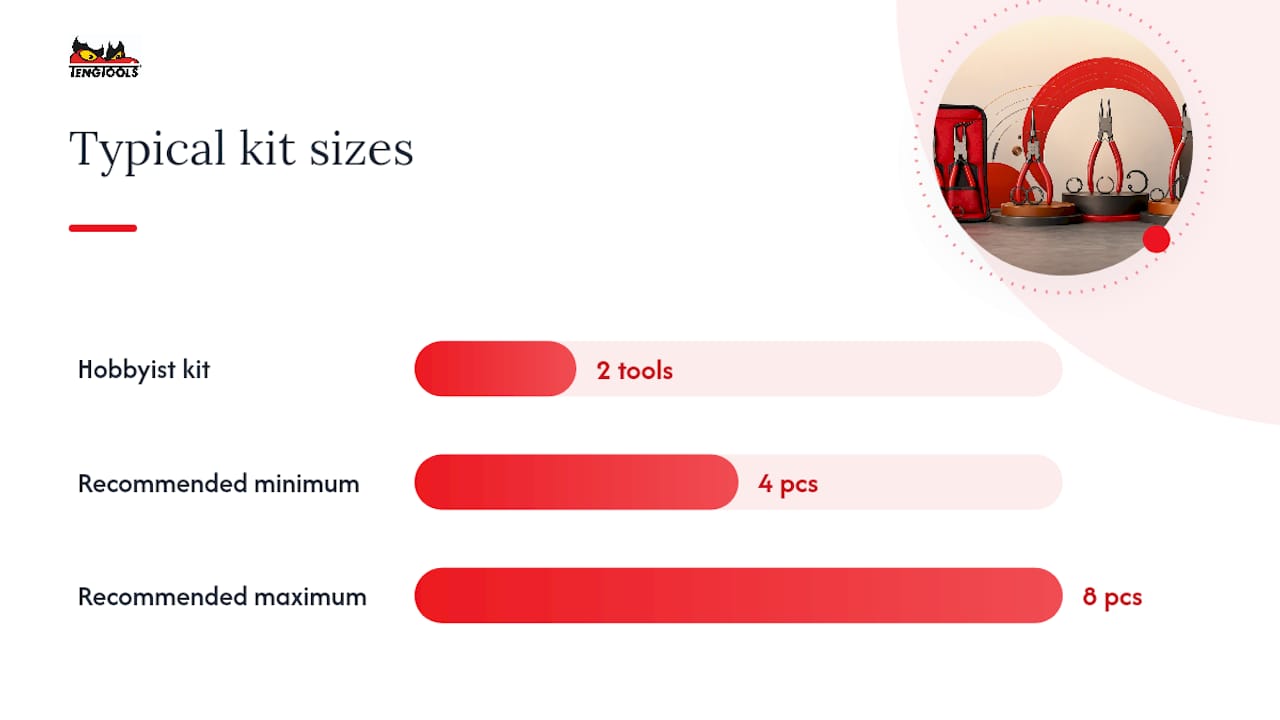
Replaceable-tip systems and professional plier sets solve a different problem: coverage. Professional recommendations consistently favor 4 to 8 piece kits that combine internal and external, straight and bent tips across the size ranges technicians actually use day to day. A well-built kit typically includes:
- A straight internal plier for open-bore access
- A bent internal plier for recessed housings
- A straight external plier for open shaft work
- A bent external plier for obstructed shaft access
- Interchangeable tip pairs in at least two size ranges
Spending more makes sense once frequency and ring size push past what a single all-purpose tool can handle. A hobbyist doing occasional repairs can usually get by with one good internal and one good external plier. A technician working rings daily, across varied equipment, is better served by a full set.
How to Use Circlip Pliers Step by Step
Technique matters as much as tool choice. Here’s the process for both actions, plus what to do when a ring won’t cooperate.
Setting up before you start:
- Identify the ring’s location (bore or shaft) and confirm you have the matching internal or external plier
- Test-fit the tips in the ring’s holes without applying full pressure, checking for a square, full seat
- Put on eye protection; a ring under tension can release with real force
Removing or installing an internal ring:
- Squeeze the handles to compress the tips and shrink the ring’s diameter
- Guide the ring into its groove (installation) or lift it clear of the bore (removal)
- Release pressure gradually so the ring seats evenly rather than springing unevenly into place
Removing or installing an external ring:
- Squeeze the handles to spread the tips and expand the ring
- Slide the ring onto the shaft and into its groove (installation) or off the shaft entirely (removal)
- Ease off the handle pressure once the ring clears, letting it settle into the groove without snapping shut
Pro Tip: A magnetic tip attachment or a simple clip guard cup, held in your free hand, catches a ring that pops loose before it disappears under a bench or into an engine bay.
Stuck or corroded rings need patience, not force. If a ring won’t compress or expand smoothly, back off, apply a penetrating lubricant around the groove, and let it sit for a few minutes before trying again. A ring that’s already stretched past its working tension will feel loose or uneven under the tips. That’s your sign to replace it rather than reuse it.
How to Choose the Right Circlip Pliers
Start with location. Internal vs external isn’t a preference, it’s determined entirely by where the ring sits, and picking the wrong action is the single most common cause of tool and ring damage. Everything after that is refinement.
Once you know the action, weigh these secondary factors:
- Size range: match the plier’s rated capacity to your ring’s actual diameter, not just what fits in the holes
- Tip access: straight for open work, bent or angled for obstructed housings and shafts
- Work frequency: occasional repairs justify a single good tool; daily professional use justifies a full set
- Tip hardness and replaceability: hardened tips last longer and interchangeable systems extend a single handle’s usefulness
Budget tools handle occasional bore or shaft work fine. Pro-grade pliers, especially ratcheting and replaceable-tip models pay off once you’re working varied ring sizes across multiple job types every week. A guide on identifying whether a ring sits in a housing or on a shaft is worth a look before you buy if you’re still unsure how to read a specific application.
| Buying factor | Occasional/hobby use | Frequent/professional use |
|---|---|---|
| Tool count | Single internal + single external plier | 4 to 8 piece set with interchangeable tips |
| Tip style priority | Straight tips for common access | Straight and bent tips for varied access |
| Ratcheting feature | Rarely necessary | Valuable for large or high-force rings |
| Tip hardness | Standard hardened tips | Replaceable hardened tips for longevity |
For a quick mental checklist at the counter or online: confirm bore or shaft, confirm ring diameter against the tool’s rated range, confirm tip access matches your housing or shaft clearance, and confirm whether a set beats a single tool for your workload.
Teng Tools in the Catalog: Matching Products to Real Jobs
A few tools in the Teng Tools catalog map directly to the access and precision challenges covered above.
- The Teng Tools Tweezer 125mm Bent/Serrated (TW2125) suits delicate positioning tasks where a full-size plier is overkill, think small clips in electronics housings or tight instrument panels.
- The Teng Tools Tweezer 180mm Straight/Serrated (TW1180) gives you a longer, straight reach for precise placement of small rings in open assemblies.
- The Teng Tools Plier Set TPR Grip TT2 Q 8 Pieces (TTD441-TQ) covers a broad range of tip styles and sizes in one kit, the kind of coverage a busy bench actually needs.
Teng Tools also lists specialized inner ratcheting circlip pliers built for the larger, high-force jobs covered earlier, all designed to ISO and DIN standards and backed by a lifetime warranty.
Small tips and interchangeable sets are exactly where tool loss becomes a real productivity drain. Teng Tools’ Get Organized™ storage system gives each tip and plier a dedicated slot in a click-together foam tray, so a missing 45-degree bent tip doesn’t cost you ten minutes of drawer-digging on a job that’s already running long.
The Real Skill Isn’t the Tool, It’s the Diagnosis
Most guides on this topic spend their energy comparing tip angles and jaw widths, and that’s backwards. The genuinely hard part of circlip work isn’t picking a tip style, it’s correctly reading whether you’re looking at a bore application or a shaft application before you ever pick up a tool. Get that wrong and no amount of tip geometry saves you.
Conventional advice also oversells the single all-purpose plier. A convertible tool that switches between internal and external action is a reasonable compromise for a technician who touches circlips rarely, but it’s a compromise, not an upgrade. Dedicated internal and external pliers, sized correctly, will always outperform a converted tool on precision and grip security. Anyone doing this work regularly should prioritize matched, dedicated tools over one tool that does everything adequately.
If you take one thing from this guide, make it this: buy for the ring size and access you actually encounter, not the size range a catalog photo makes look impressive. A drawer full of tools rated for jobs you never do is just clutter with a warranty.
— David
Get the Right Circlip Pliers Without Guessing on Fit
Tengtoolsusa built its catalog around the exact problem this guide walks through: matching the correct tip geometry and ring size to the job in front of you, without settling for a one-size-fits-all tool that compromises on both. Every plier and tip in the range meets ISO and DIN standards and ships with a lifetime warranty, so the tool you buy for a bore job today still holds up on a shaft job five years from now.
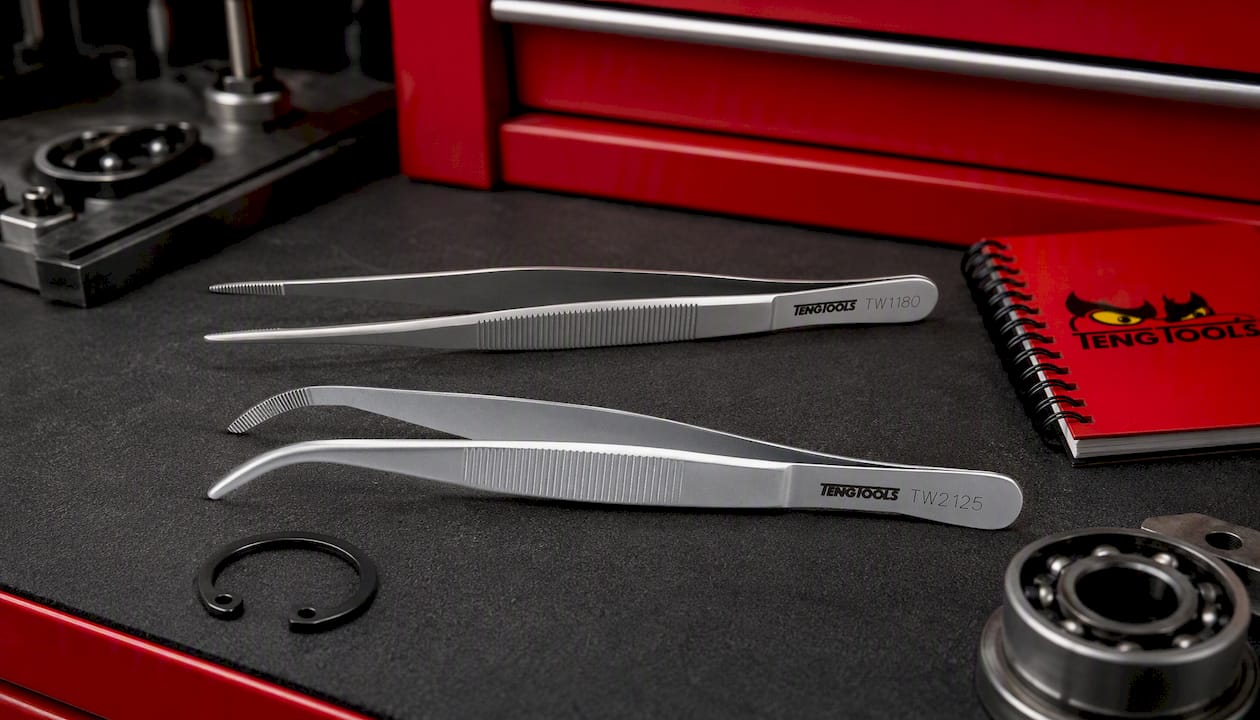
If you’re outfitting a bench that handles varied circlip work, the Teng Tools Plier Set TPR Grip TT2 Q 8 Pieces covers internal and external, straight and bent tips in one kit, and it slots directly into the Get Organized™ tray system so nothing goes missing mid-job. For finer placement work, the 180mm straight tweezer and 125mm bent tweezer round out a kit for delicate assemblies. Orders ship from a warehouse in Texas. Check the current catalog and pick the set sized for the work you actually do.
Sources
FAQ
How Many Types of Circlip Pliers Are There?
Circlip pliers split into two core action types, internal (compress) and external (expand), with variations in tip style (straight, bent, long-nose), size range, and specialty designs like ratcheting and convertible models built on top of those two base actions.
What Is the Best Tool for Removing Circlips?
The best tool matches the ring’s location: internal pliers for rings seated in a bore or housing, external pliers for rings wrapped around a shaft. Match tip diameter and reach to the specific ring before attempting removal.
What Are 10 Different Types of Pliers?
Common plier types include internal circlip pliers, external circlip pliers, straight-tip pliers, bent-tip pliers, long-nose pliers, ratcheting circlip pliers, convertible circlip pliers, needle-nose pliers, tweezer-style pliers for delicate parts, and general-purpose grip pliers used for adjacent bench work.
What Are the Best Circlip Pliers for a Full Kit?
For technicians handling varied ring sizes and access angles, professional multi-piece sets covering 4 to 8 tip and tool combinations are widely recommended over single-purpose tools, since they cover internal and external, straight and bent options in one kit.
Do I Need Different Pliers for Small and Large Rings?
Yes. Miniature and standard-size pliers use narrower, more precise tips suited to small rings, while ratcheting or heavy-duty pliers handle large-diameter rings that need more force to compress or expand safely.