
Keep tools dry, apply a thin protective barrier, and store them in an enclosed space with a desiccant or vapor-phase inhibitor. Do those three things consistently and you stop rust before it ever gets started. After each use, wipe the metal down, coat it lightly with oil or wax, drop in a silica packet or VCI emitter, and close the drawer or lid. That’s the entire routine.
TL;DR:
- Using a vapor-phase corrosion inhibitor or desiccant in sealed storage protects工具 more effectively than relying on oil alone, especially for infrequently used tools.
- Maintaining shop humidity below 50% and measuring it with a hygrometer significantly slows oxidation, with dehumidifiers serving large, damp spaces better than passive options.
- Proper storage layout, such as foam trays and wall racks, reduces metal contact, allowing air circulation and decreasing the risk of trapping moisture against tools.
- Applying a light oil or paste wax is suitable for daily tools and surfaces needing a durable film, while VCI protectors are ideal for sealed, infrequently accessed containers.
- Regular maintenance routines with wiping, inspection, and reapplication schedules are essential to prevent rust buildup and ensure long-term tool integrity.
Table of Contents
- Quick Rust-Prevention Checklist for Tools
- How Does Humidity Affect Rust, and How Do You Control It?
- What’s the Best Coating to Prevent Rust on Tools?
- What’s a Realistic Rust Maintenance Schedule?
- How Do You Remove Rust That’s Already Formed?
- How Teng Tools Storage Design Helps Prevent Rust
- Drawer, Chest, or Pegboard: Which Storage Fits Your Shop?
- Practical Perspective: Balancing Convenience and Protection
- How Teng Tools Products Fit This Routine
- Sources
- FAQ
Quick Rust-Prevention Checklist for Tools
Most tool rust comes down to skin salts, humidity, and neglect. You don’t need a lab setup to stop it. You need a short routine you’ll actually stick to after a long day of work.
- Wipe every tool down after use. A microfiber cloth or shop rag removes sweat, grease, and grit that hold moisture against the metal. This thirty-second habit is the single most cost-effective rust prevention step you can take, since it clears away the salts and oils that catalyze corrosion.
- Apply a thin oil or paste wax. Light machine oil works for wrenches and sockets you use daily. Paste wax suits cast-iron surfaces like table saws or vise bodies that need a harder, longer-lasting film.
- Store tools in an enclosed space with a desiccant or VCI emitter. An open pegboard looks organized but does nothing to control humidity. A drawer or cabinet with silica gel or a vapor-phase inhibitor actively fights moisture.
- Set a reapply schedule. Mark a calendar reminder for monthly checks on frequently used tools and quarterly checks on stored ones.
Pro Tip: Stick a small piece of masking tape inside the drawer lid and write the date of your last oil pass. It takes ten seconds and saves you from guessing whether that box of taps has been serviced this quarter.
How Does Humidity Affect Rust, and How Do You Control It?
Relative humidity above roughly 50% gives airborne moisture enough concentration to accelerate oxidation on bare steel, while keeping shop air between about 30% and 50% relative humidity is one of the most repeated recommendations for preventing corrosion. If you’ve never measured your shop’s humidity, a $15 hygrometer from a hardware store will tell you more in five minutes than any guesswork ever will.
A standalone dehumidifier makes sense for a detached garage or basement shop that runs consistently damp, especially in humid climates where a dehumidifier paired with a regular wipe-and-oil habit produces better long-term results than either measure alone. For a single tool chest or a smaller enclosure, passive desiccants or VCI emitters usually do the job without the electric bill.
VCI (vapor-phase corrosion inhibitor) products work differently than oil. They release molecules that form an invisible protective layer across every exposed metal surface inside a closed container, reaching into crevices, threads, and tight sockets that a rag or spray can never fully cover. That protective layer keeps re-establishing itself between openings, which is exactly why VCI outperforms plain oil in a chest or cabinet you only open occasionally.
Storage layout matters as much as the product you choose:
- Avoid nesting tools directly against each other. Metal-to-metal contact traps moisture and scratches protective coatings.
- Use foam trays or drawer liners to separate tools and let air circulate around each piece.
- Leave gaps rather than packing drawers tight. Airflow inside a drawer matters even when the drawer itself is closed.
- Mount frequently grabbed tools on wall racks instead of piling them in an open bin.
A single small VpCI emitter is typically rated to protect around one cubic foot of enclosed space, so dosing should scale with the size of your drawer or cabinet, not just the number of tools inside it, according to Cortec’s guidance on hand tool protection.
What’s the Best Coating to Prevent Rust on Tools?
The right protectant depends on how often you’ll use the tool and how long it needs to sit.
- Light machine oil suits sockets, wrenches, and anything you touch daily. It’s cheap, fast to apply, and easy to wipe off before use.
- Camellia oil is a favorite among woodworkers for hand planes and chisels because it’s thin, low-odor, and won’t gum up fine edges.
- Paste wax or clear coatings work best on cast-iron surfaces like table saw beds, jointer tables, and vise bodies that need a harder, more durable film.
- VCI emitters, papers, and liners protect enclosed storage without leaving any oily residue, which matters if you’re storing precision tools or anything with electronics, according to Zerust’s product overview.
WD-40’s original formula is genuinely good at one thing: displacing water off metal fast after a wet job or a rained-out worksite. It is not built for long-term protection, though, because that light formula evaporates within days and leaves nothing behind to shield the surface. If you’re closing up a chest for the season, oil or VCI beats WD-40 every time.
Each method carries trade-offs. Oil-based sprays attract dust and grit over time, which means tools stored in an open shop need more frequent wipe-downs than tools in a sealed cabinet. Desiccant packs eventually saturate and stop absorbing moisture until they’re dried out or replaced. VCI needs a reasonably sealed enclosure to build up its protective vapor concentration, so it underperforms in a drafty open shed.
Pro Tip: Never oil rubber or foam grips. Petroleum-based oils can break down synthetic handle materials over time, so wipe the metal shaft only and keep the cloth away from insulated sections.
What’s a Realistic Rust Maintenance Schedule?
Protection only works if the routine survives contact with an actual workday. Here’s a schedule built around how busy shops actually operate.
- After every use (about one minute): Wipe the tool clean, apply a thin coat of oil if it’s headed into storage, and return it to its spot in the drawer or rack rather than leaving it on the bench overnight.
- Monthly: Pull frequently used tools and inspect moving parts like ratchet mechanisms and pliers joints. Clean with alcohol or a light degreaser if grime has built up, then recoat before putting them back.
- Seasonally: Do a full clean of your storage, check whether VCI emitters need replacing, swap out saturated desiccant packs, and give long-term stored tools a fresh coat of wax rather than just oil.
- Ongoing: Use a simple sticker or tape log inside each drawer to mark the last service date, so nobody on the team has to guess whether a toolbox has been touched since spring.
The seasonal pass is the one most people skip, and it’s the one that catches the tools you haven’t picked up in months. A specialty set sitting untouched since last winter is exactly the kind of tool that rusts quietly while you’re focused on daily drivers.
How Do You Remove Rust That’s Already Formed?
Light surface rust comes off with steel wool, a Scotch pad, or fine sandpaper. Work in the direction of the metal’s grain, wipe away the dust, and oil the surface immediately. Bare steel starts oxidizing again within hours of exposure to air, so don’t leave a cleaned tool sitting uncoated overnight.
For rust that’s gone deeper than the surface, an acid soak works well. Vinegar or a citric acid solution can loosen oxidation over several hours to overnight, depending on severity. Rinse thoroughly afterward, since leftover acid residue will restart corrosion faster than the rust you just removed. Dry the tool completely before oiling.
- Steel wool or a Scotch-Brite pad handles light, surface-level rust in minutes.
- A vinegar or citric acid soak works for moderate rust across a wider surface.
- Electrolysis is worth the setup for valuable or antique tools with heavy corrosion, using a battery charger, washing soda, and a sacrificial anode, but it requires ventilation and care around the electrical setup.
- Replace, rather than restore, any tool where rust has pitted a load-bearing edge or thrown off a measuring surface’s accuracy.
Surface rust is porous, and it will keep eating into the metal underneath even after you paint or coat over it, so removing existing oxidation before sealing isn’t optional if you want the fix to actually last. Pro Tip: After an acid soak, neutralize any leftover residue with a baking soda rinse before drying and oiling. It stops the acid from continuing to react once the tool is back in the drawer.
How Teng Tools Storage Design Helps Prevent Rust
The biggest source of hidden rust risk isn’t weather. It’s tools piled loosely in a drawer, scratching each other’s protective coatings and trapping moisture between metal surfaces. Teng Tools’ Get Organized™ system assigns every tool a designated slot in a foam tray, which cuts down on that metal-to-metal contact and makes a quick visual inspection possible at a glance instead of digging through a jumbled bin.
That layout also makes desiccant and VCI placement far more effective, since a shaped tray keeps a silica packet or emitter positioned near the tools instead of rolling around loose in a drawer.
- A wall rack works well for tools you grab constantly, keeping them off damp bench surfaces and exposed to airflow rather than sealed against a shelf.
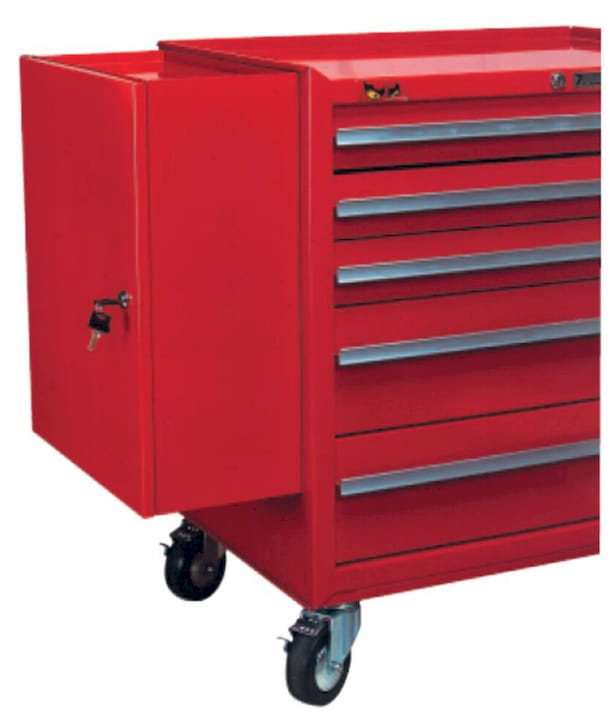
- An enclosed side cupboard suits full sets that need protection from ambient shop humidity, especially paired with a VCI liner.
- Foam-tray drawer systems reduce nesting and scratching for tools that live in a rolling cabinet or workshop chest.
Pairing the right storage format with your humidity control and coating routine is what actually closes the gap between “I oiled my tools once” and genuinely rust-free tools years later. For a deeper look at layout choices, see this guide on organizing mechanic tools for faster, drier storage.
Drawer, Chest, or Pegboard: Which Storage Fits Your Shop?
Not every storage format protects tools equally well, and the right choice depends on how often you use a given tool and how exposed your shop is to humidity swings.
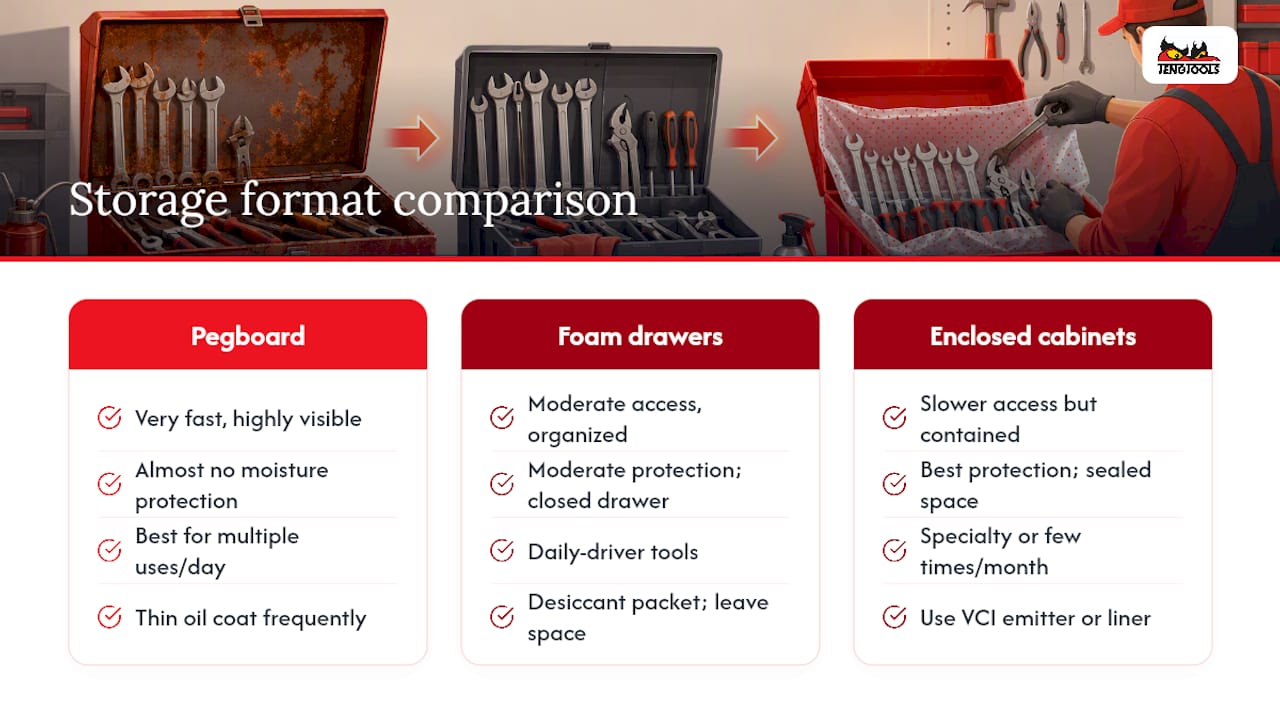
Open pegboards offer speed and visibility, which makes them great for tools you touch multiple times a day. They offer almost no protection against ambient moisture, though, so anything hung on a pegboard needs a thin oil coat more often than tools tucked away in a drawer.
Drawer systems with foam inserts strike a middle ground. Tools stay separated, contact points drop, and a closed drawer holds a desiccant packet’s effect longer than an open shelf ever could. This is where most daily-driver tools belong.
Enclosed chests and cabinets offer the best environmental control, particularly when combined with a VCI emitter or liner, because a sealed space lets that vapor-phase protection actually build up and stay effective. This is the right home for specialty tools, measuring equipment, or anything that only comes out a few times a month.
Spacing matters inside every format. Cramming a drawer full of wrenches so they overlap and grind against each other during use wears through oil films fast and creates fresh bare-metal scratch points. Leave breathing room, use dividers or trays, and mount your most-used pieces where you’ll actually see them, not buried under three other layers of tools. Reviewing 11 practical steps for tool box care is a solid next move if your current setup still relies on loose bins.
Practical Perspective: Balancing Convenience and Protection
The honest trade-off here isn’t between good habits and bad ones. It’s between quick daily wins and one bigger investment that multiplies their effect. A wipe-and-oil habit costs you a minute and stops most rust on its own. Where people get it wrong is assuming that minute is enough for tools sitting untouched for months, when a VCI emitter or a modest dehumidifier is what actually protects them.
On job sites, the fix is simple: keep a small kit of rags, oil, and a couple of desiccant packets in the gang box. That five-dollar habit is what keeps a $200 socket set from turning into a replacement order six months later.
— David
How Teng Tools Products Fit This Routine
This storage system is designed to reduce the metal-to-metal contact that traps moisture in the first place, and many sets come with a lifetime warranty.
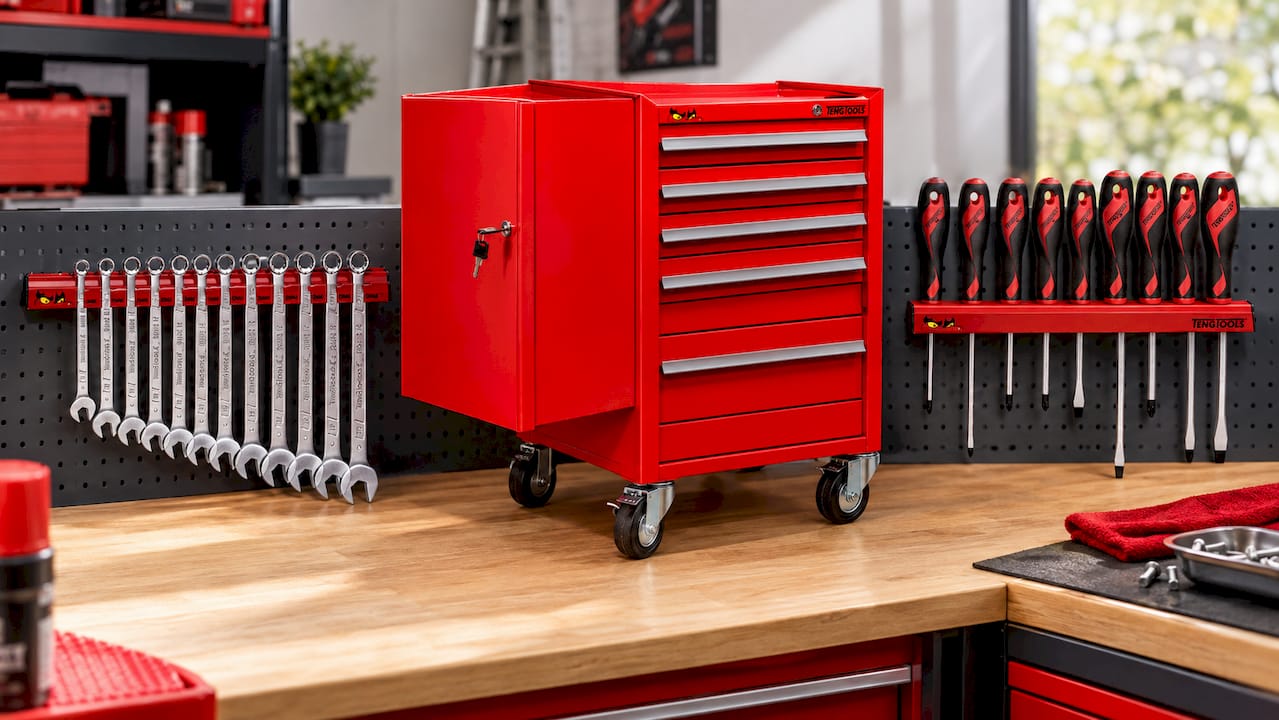
If your wrenches are still tangled in a drawer, the Combination Spanner Set Wall Rack keeps all 12 pieces separated and visible, which makes a quick wipe-down routine actually practical instead of a chore. For a full set that needs shelter from shop humidity, the PRO35™ Side Cupboard gives you the enclosed space a VCI liner or desiccant pack needs to work properly. Screwdrivers that usually roll around loose stay separated and off damp surfaces on the Screwdriver Set Wall Rack, which cuts down on the tip-to-tip contact that chips away at coatings.
Fast shipping means you can fix a rust-prone storage setup before your next work week starts. Browse the full range and build a layout that actually matches how you work.
Sources
For deeper technical detail on vapor-phase inhibitors, Zerust’s rust prevention guide covers emitter types and placement. Build-Construct’s breakdown of VpCI trade-offs is worth a read if you’re deciding between oil and vapor-phase protection for a specific enclosure.
- How to Prevent Rust on Hand Tools | Cortec Corporation
- How to Keep Tools From Rusting - Zerust Rust Prevention Products
- Engineerskill
- Rust never sleeps: you can stop it | Treehugger
FAQ
What Is the Best Thing to Put on Tools to Prevent Rust?
For daily-use tools, a light machine oil or camellia oil works best because it’s fast to apply and wipe off. For long-term enclosed storage, a VCI emitter or liner protects better since it reaches every surface without leaving residue.
What Can I Spray on My Tools to Prevent Them From Rusting?
A light oil spray displaces moisture and leaves a thin protective film, but for tools going into storage for weeks or months, pair the spray with a VCI emitter or desiccant packet inside a closed drawer or cabinet.
How Do I Keep My Tools From Rusting in an Unheated Garage?
Keep relative humidity in the space between roughly 30% and 50%, use a dehumidifier if the garage runs consistently damp, and store tools in enclosed cabinets or chests with VCI emitters or silica packets rather than on open shelves.
Does WD-40 Prevent Rust?
WD-40’s original formula displaces water and works well for short-term protection after a wet job, but it evaporates within days and isn’t a durable coating, so it shouldn’t be your only defense for tools in long-term storage.