
The fastest way to fix a cramped garage is to stop thinking in single products and start thinking in layers: a vertical wall system for the tools you grab daily, overhead racks for the bulky gear you touch twice a year, and one compact rolling cabinet to lock up the heavy stuff. That combination clears the floor, keeps your most-used tools within arm’s reach, and gives torque equipment and sockets a secure home. A modular setup like Teng Tools’ Get Organized™ trays slots neatly into that third layer, giving you a ready-made compact cabinet instead of a weekend build.
TL;DR:
- Installing wall-mounted pegboard or slatwall systems ensures daily tools are within reach and prevents clutter from accumulating on the floor.
- Ceiling-mounted racks anchored into joists can hold up to 1,000 pounds of seasonal and bulky gear, maximizing vertical space in small garages.
- Using narrow rolling cabinets or shallow wall-mounted cabinets allows secure, heavy tool storage without sacrificing valuable floor real estate.
- Properly measuring clearance and weight limits before mounting prevents hardware failure and prolongs the lifespan of storage solutions.
- Regularly inspecting and maintaining hardware, cleaning foam trays, and relabeling bins ensure the system remains functional and organized over time.
Table of Contents
- Space-Saving Tool Storage Ideas That Actually Work in a Small Garage
- How to Choose What Goes Where First
- Three Small-Garage Layouts You Can Copy This Weekend
- Weekend DIY Projects That Free Up Real Space
- Why Modular Trays and Compact Cabinets Solve the Small-Garage Problem
- Keeping Your Storage System Working a Year From Now
- Author Perspective: What Actually Survives in Real Garages
- Teng Tools Storage Picks for Small Garages
- Sources
- FAQ
Space-Saving Tool Storage Ideas That Actually Work in a Small Garage
You don’t need a bigger garage. You need a system that uses the walls and ceiling you’re already ignoring. Most small-garage failures come from treating floor space as the default storage zone when it’s actually the most valuable real estate you have.
Here’s what to prioritize, roughly in order of impact:
- Pegboard or slatwall rail systems for hand tools, chargers, and anything you reach for weekly. A FastTrack-style rail mounts fast and takes hooks, baskets, and shelves as your tool collection grows.
- Ceiling-mounted overhead racks for holiday bins, camping gear, and bulky items you use a few times a year. Tested kits from brands like Fleximounts add 600 to 1,000 pounds of usable storage when anchored into joists correctly.
- Slim wall cabinets or shallow overhead cabinets to hide clutter without eating floor depth. These work well for chemicals, extra fasteners, or anything you’d rather not have visible.
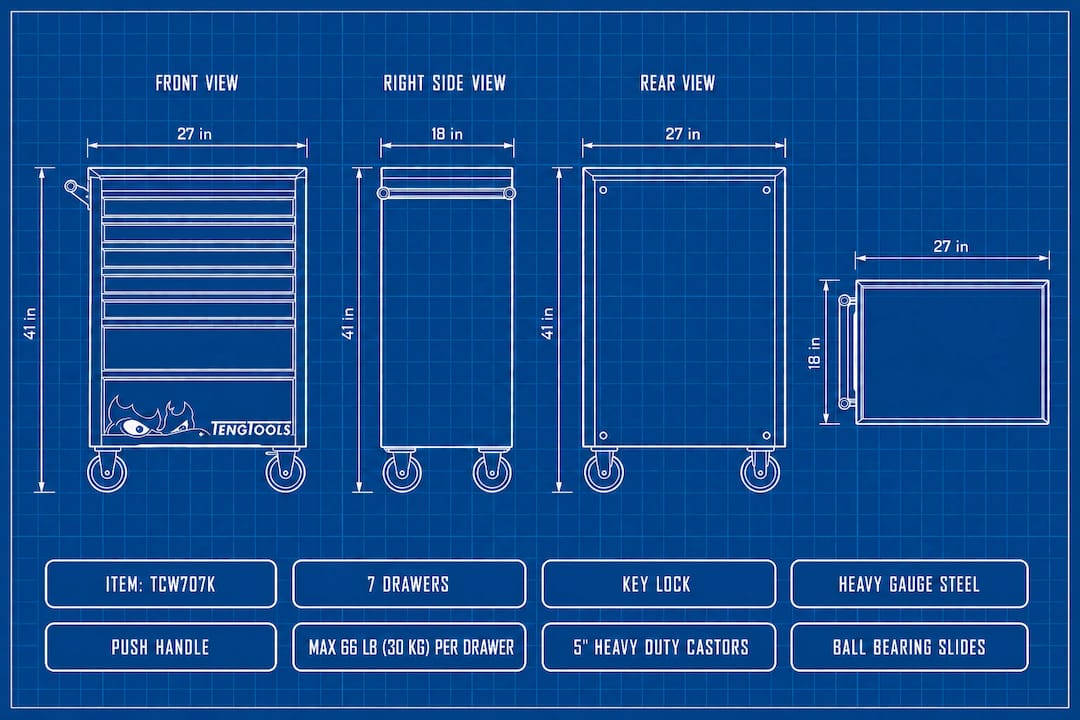
- A narrow rolling tool chest or 27-inch roller cabinet for wrenches, sockets, and anything heavy enough to need drawers instead of hooks.
- Drawer organizers and foam trays for sockets, bits, and small parts. Testing from BobVila found that foam and plastic tray systems cut search time for small parts dramatically compared to loose drawer storage.
- Vertical long-handled tool racks for rakes, brooms, and shovels, so they stop leaning against your car door.
- Open shelving with labeled bins for the stuff you use twice a season. Heavy-duty units can hold up to 5,000 pounds total, which makes them a good landing spot for anything you’d otherwise stack on the floor.
Pro Tip: Start with the wall closest to your workbench, not the biggest empty wall. Tools you use most should travel the least distance from hand to hook.
How to Choose What Goes Where First
Before you buy anything, walk your garage with a tape measure. Professional organizers consistently point to mapping your walls, ceiling, and floor clearance as the step that prevents wasted money on hardware that doesn’t fit.
- Measure clearance and find your studs. Note ceiling height, door swing, and where studs or joists sit, since that determines what can be mounted where.
- Apply the frequency rule. Daily tools belong within arm’s reach at chest to shoulder height. Seasonal items go overhead or on top shelving.
- Match weight to mounting hardware. Anything over 30 pounds needs a stud or joist, not a hollow-wall anchor. Heavier overhead loads need rated ceiling hardware, not drywall screws.
- Weigh modular rails against built-in cabinets. Rails cost less upfront and flex as your tool count grows; cabinets cost more but protect tools from dust and theft.
- Never exceed the manufacturer’s stated weight limit on overhead storage, and always secure heavy loads to joists rather than ceiling drywall alone.
Three Small-Garage Layouts You Can Copy This Weekend
Every garage is a little different, but most small garages follow common working patterns. Pick the one closest to how you actually use the space.
- Parking-first layout. If the car has to fit, put ceiling racks over the hood line for bulky items, run a wall rail along one side for grab-and-go tools, and add a fold-down bench that tucks flush when not in use.
- Compact workshop layout. If the garage doubles as your shop, install a narrow bench with pegboard above it, park a compact roller cabinet beside or under the bench, and add drawer organizers for anything smaller than a wrench.
- Multi-use layout. If the garage stores sports gear, seasonal decorations, and tools together, go tall: shelving with labeled bins near the ceiling, slim cabinets at shoulder height, and vertical holders near the door for long-handled tools.
For any layout with overhead storage, plan on locating joists first. Tested overhead kits rated for 600 to 1,000 pounds still depend entirely on hitting solid framing, not just drywall.
Weekend DIY Projects That Free Up Real Space
You don’t need a full renovation to see a difference by Monday. A few small projects, done right, solve most of the clutter problem.
- Mount pegboard on furring strips, not directly against drywall. The gap lets you route cords behind the board and clears uneven studs.
- Build foam or plastic drawer trays custom cut to your sockets and bits, so nothing rattles loose when the drawer slides.
- Install a basic overhead rack carefully. Locate joists first, use carriage bolts rather than drywall screws, and load it gradually to test the mount before hanging your full off-season inventory. Community builds shared in garage storage forums show plenty of low-cost variations worth stealing for inspiration.
- Add magnetic tool strips near the bench, stackable labeled bins for small parts, and adhesive cable holders to keep chargers off the floor.
Pro Tip: Test any new mount with half its rated load for a week before trusting it with the full weight. A slow leak in drywall anchors shows up before a catastrophic failure does.
Why Modular Trays and Compact Cabinets Solve the Small-Garage Problem
Get Organized™ trays click together inside a drawer so every socket, bit, and driver has one specific slot. That kind of tray sizing is what foam organizer systems are built to deliver: less time hunting, less chance a tool walks off with a borrower.
A narrow roller cabinet fits garage layouts better than a full-size chest, since it clears a standard doorway and still holds several drawers of heavy tools. Rolling chests remain a favored pick for organized heavy-tool storage in tight workshop footprints.
- Wall rack organizers suit the parking-first layout, where wall space is your only real estate.
- The 27-inch roller cabinet suits the compact workshop layout, sitting beside a narrow bench without blocking floor traffic.
- Modular trays suit any layout where sockets and small parts currently live loose in a drawer.
Keeping Your Storage System Working a Year From Now
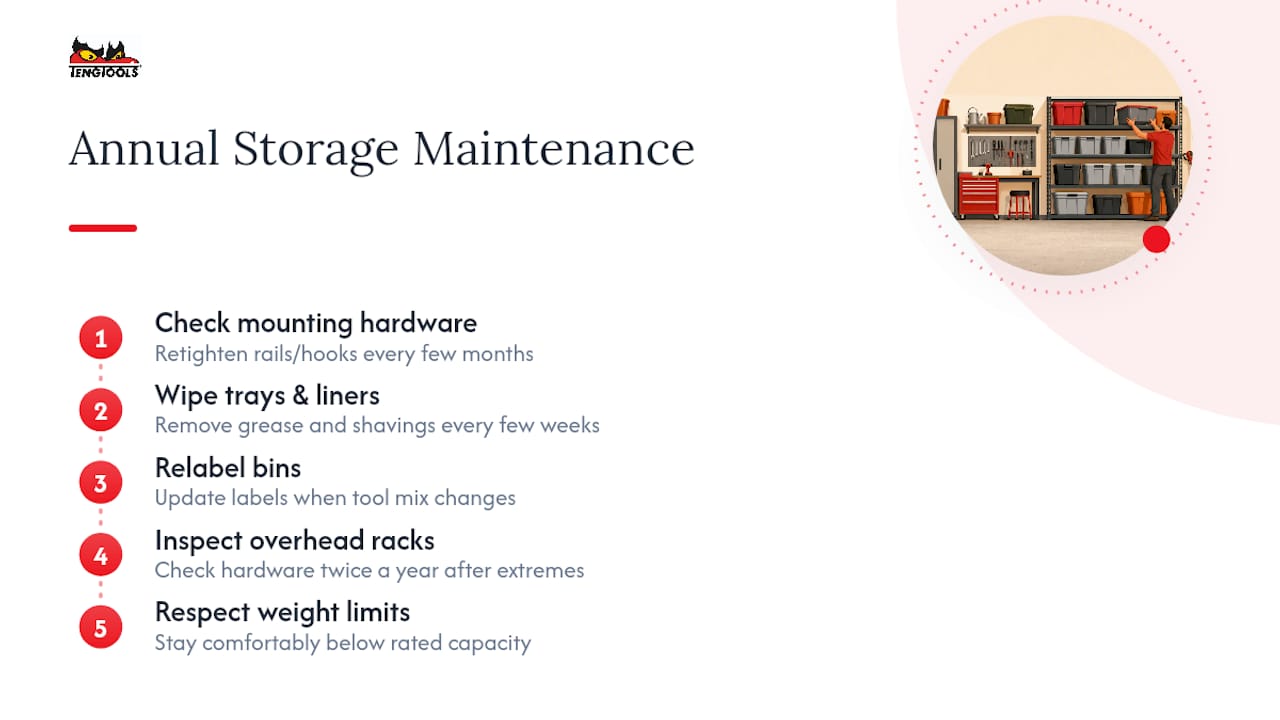
A storage system earns its keep only if it survives daily use. Rails and hooks loosen over time, especially in garages that see temperature swings between summer heat and winter cold, so check mounting hardware every few months and retighten anything that’s started to wobble.
Wipe down foam trays and drawer liners periodically. Grease and metal shavings build up fast in socket organizers, and that residue eventually makes trays stick or foam compress unevenly. A quick wipe with a shop rag every few weeks keeps trays seated properly and keeps you from misjudging which slot a tool belongs in.
Relabel bins whenever your tool mix changes. Storage systems fail silently when the labels stop matching what’s actually inside, and that’s usually the first sign a garage is sliding back toward clutter.
Check overhead rack hardware at least twice a year, especially after temperature extremes that can cause wood framing to shift slightly. A rack that was solid in June can develop play by December if the joists it’s anchored to have moved even a fraction of an inch.
Finally, don’t overload a system just because there’s room. Weight limits exist because the mounting hardware, not the shelf material, is usually the failure point. Staying under the rated capacity by a comfortable margin adds years to a setup that would otherwise need replacing.
Author Perspective: What Actually Survives in Real Garages
Most homeowners don’t fail at garage storage because they pick the wrong products. They fail because they install everything at once, skip the load test, and never label anything. Test every mount before trusting it, label bins the day you fill them, and add one improvement at a time. Incremental upgrades stick. Weekend overhauls usually don’t survive the first winter.
— David
Teng Tools Storage Picks for Small Garages
If you’d rather buy a system than build one, three products cover most of the layouts above without a trip to the hardware store. The Teng Tools Screwdriver Set Wall Rack, 10 Pieces (WRMD10N) mounts straight to a wall rail or stud, keeping screwdrivers visible and out of a crowded drawer. It’s the fastest single upgrade for the parking-first layout, where wall space does all the work.
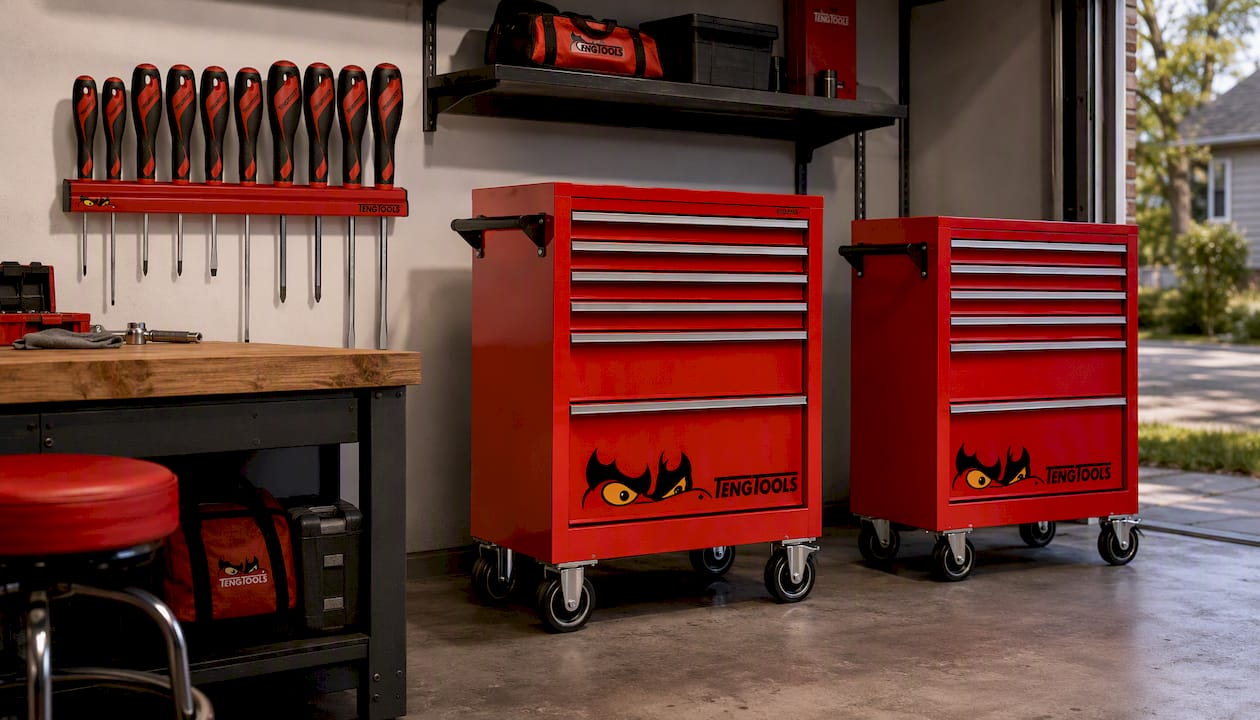
For heavier gear, the Teng Tools 27" Classic Roller Cabinet, 7 Drawers (TCW707K) gives you seven drawers of lockable storage in a footprint narrow enough for a compact workshop layout beside a bench. If you need it mobile from day one, the preassembled castor version skips the setup and rolls straight into place. Every Teng Tools cabinet ships with a lifetime warranty and same-day shipping from the Fort Worth warehouse, so a compact cabinet that fits your layout is one order away.
Sources
- The 8 Best Garage Storage Solutions The Spruce Has Tested
- 15 Easy Tool Storage Ideas - BobVila
- The 4 Best Toolboxes of 2026 | Reviews by Wirecutter
FAQ
How do you store tools in a small garage?
Combine a wall-mounted rail or pegboard system for daily tools, an overhead rack anchored to ceiling joists for seasonal gear, and a compact rolling cabinet for heavy items like sockets and wrenches.
What is the best tool storage system for a garage?
The best system pairs vertical wall storage with modular drawer organization, since it keeps frequently used tools accessible while giving small parts, like sockets and bits, a dedicated spot in foam trays.
What is the best tool storage for small spaces?
Narrow rolling cabinets, like a 27-inch roller cabinet, and slim wall-mounted racks work best in small spaces because they add drawer or hook capacity without eating floor clearance.
What are some good ideas for storage in a small garage?
Pegboard for hand tools, overhead racks for bulky seasonal items, labeled bins on open shelving, and a compact cabinet for heavy tools cover most small-garage storage needs without a full renovation.