
A flare nut wrench is the correct tool for brake, fuel, hydraulic, and refrigerant line fittings because it grips more of the nut than an open-end wrench and cuts the risk of rounding and leaks. If you turn tubing nuts for a living, or even a few times a season, this is the wrench that keeps a five-minute job from becoming a two-hour repair.
TL;DR:
- Flare nut wrenches contact five flats instead of two, distributing force more evenly and preventing rounding on soft metal fittings during removal.
- Using the correct size and style of flare nut wrench, especially a double-ended or crowfoot type, saves time and reduces the risk of damaging fittings across different systems.
- Proper technique, including full seating, backing up the fitting, and steady pressure, is crucial to avoid rounding or stripping nuts, especially in tight or awkward spaces.
- Applying pressure gradually and soaking seized fittings in penetrating oil for at least 15 minutes improves chances of freeing corroded or rounded nuts without damaging the line.
- Organizing tools in dedicated, visible sets reduces time spent searching, helping technicians avoid mistakes that cause rework or tool damage during flare fitting jobs.
Table of Contents
- Flare Nut Wrench Uses on the Job
- Why a Flare Nut Wrench Beats an Open-End Wrench Here
- Choosing the Right Flare Nut Wrench Type and Size
- How to Use a Flare Nut Wrench Step by Step
- Fixing Seized, Corroded, or Rounded Flare Nuts
- Getting Torque and Sealing Right
- Why Shop Tooling and Organization Reduce Rework
- My Checklist for Confident Flare-Fit Work
- Building Out Your Flare Wrench Kit
- Sources
- FAQ
Flare Nut Wrench Uses on the Job
You reach for a flare nut wrench any time a soft brass or steel fitting sits on the end of a fluid line, and you cannot afford to round it off. These fittings show up more often than most techs expect, and each one comes with its own reason for needing a wrench with better grip.
- Brake lines and bleeder valves. Brake fittings sit exposed to road salt, brake fluid residue, and years of heat cycling, which makes them prone to seizing. A rounded bleeder screw on a caliper often means drilling it out, so the extra grip matters here more than almost anywhere else.
- Fuel lines and injector fittings. Fuel system nuts are frequently brass or soft steel, and a slipped wrench near a fuel line is not just inconvenient. It’s a fire risk.
- Hydraulic and power-steering systems. These fittings run under real pressure, and a fitting that’s chewed up during removal rarely seals the same way twice, even after installing a new seal.
- HVAC and refrigeration flare joints. Copper flare nuts on AC lines are notoriously soft, and even light rounding can lead to a slow refrigerant leak that takes weeks to diagnose.
- Gas and water plumbing. Flare fittings on gas lines and some water supply connections carry the same risk profile as HVAC work, where a compromised seal isn’t just a nuisance.
- Marine and bicycle hydraulic lines. Smaller marine fuel systems and hydraulic disc brake lines on bicycles use scaled-down versions of the same flare fittings, and the same rounding risk applies at a smaller size.
The common applications across automotive, hydraulic, and HVAC work all share one thing: soft metal fittings that punish the wrong tool.
Why a Flare Nut Wrench Beats an Open-End Wrench Here
Contact geometry is the whole story. An open-end wrench grips a fitting on two flats. A flare nut wrench wraps around five of the six flats, thanks to a narrow slot cut into an otherwise closed ring. That difference in contact area is what prevents the wrench from slipping and rounding the nut when you break loose a fitting that’s been sitting for years.
Grab the wrong wrench on a stubborn brake line fitting and the failure mode is predictable: the jaws slip, the corners round off, and you’re now fighting a nut that no wrench will grip cleanly. At that point you’re either drilling it out or replacing the whole line, which turns a $4 fitting into an hour of labor.
- Open-end wrenches contact two flats and slip easily under torque.
- Flare nut wrenches contact five flats and distribute force evenly.
- Rounded fittings often mean cutting the line rather than reusing it.
- New fittings rarely seal as well the second time around.
There’s a narrow case where a standard wrench is fine: a fitting you already know is loose, low-torque, and easy to reach, like a fresh fitting you just hand-tightened. Even then, most experienced techs keep the habit of reaching for the flare wrench anyway.
Pro Tip: Keep a dedicated flare nut wrench set in your rolling cart instead of your general wrench drawer. If it’s mixed in with your combination wrenches, you’ll grab the wrong one under time pressure, and that’s exactly when rounding happens.
Choosing the Right Flare Nut Wrench Type and Size
Not every flare nut wrench looks the same, and picking the wrong style costs you time on tight jobs. Here’s how the main designs break down.
- Standard line wrench. A double-ended wrench with a flare nut opening on each end, usually in two sizes. This is the workhorse for brake and fuel line work where you have room to swing a wrench.
- Crowfoot flare head. A small flare nut wrench head with no handle, designed to mount on a ratchet, breaker bar, or torque wrench. This is the answer when a fitting sits buried behind a subframe or fuel rail.
- Adjustable flare wrench. Less common and less rigid, but useful when you’re working on an odd or damaged fitting size that a fixed wrench won’t seat on properly.
Sizing matters as much as style. Automotive brake and fuel work commonly calls for 10 mm and 11 mm metric sizes, along with SAE 3/8 inch and 7/16 inch, and mixing metric and SAE on the same vehicle is more common than most DIYers expect. A metric to standard conversion reference earns its place in any shop that works on both domestic and import platforms.
Crowfoot heads come in 1/4 inch, 3/8 inch, and 1/2 inch drive to match your ratchet or torque wrench, and choosing the right drive size keeps you from needing an adapter that throws off your leverage. For a minimal shop set, cover the two most common metric sizes and the two most common SAE sizes before you worry about anything else.
How to Use a Flare Nut Wrench Step by Step
Technique matters more than tool quality here. Even the best wrench will round a nut if you skip the setup.
- Seat the wrench fully before applying force. Slide the wrench over the nut until it sits flush against the flats, not angled or partially engaged. A wrench sitting at an angle contacts fewer flats and defeats the whole purpose of the tool.
- Hand-thread before you go final. Whether you’re removing or installing, get the nut moving by hand first when possible. This confirms the threads aren’t cross-threaded before you commit real torque.
- Always back up the fitting. Hold the stationary side, whether that’s the tube nut or the fitting body, with a second wrench while you turn. This is the step most techs consider the single most important habit in the whole process, because the flare wrench protects the nut, but the backup wrench protects the tube from twisting or kinking.
- Apply steady, even pressure. Sudden jerks or shock force are how corners round even on a well-seated wrench. If a fitting won’t move, stop and address it rather than muscling through.
- Mount a crowfoot at 90 degrees when using a torque wrench. Keeping the crowfoot square to the torque wrench handle preserves an accurate reading, since any offset angle changes the effective torque and forces you to calculate a correction factor you can usually avoid by just keeping the geometry square.
Pro Tip: When you’re stuck fighting an angled crowfoot setup under a dash or behind an engine, a short wobble extension bar often solves the access problem without sacrificing your torque accuracy the way an offset crowfoot would.
Fixing Seized, Corroded, or Rounded Flare Nuts
Every mechanic eventually meets a fitting that won’t budge. How you handle the next ten minutes decides whether you save the line or replace it.
- Soak the fitting in penetrating oil and give it real time, ideally 15 to 30 minutes, not a quick spray and immediate wrench attempt.
- Apply controlled heat only when the fitting is far enough from fuel or brake fluid to do so safely, since flame near either is a hazard.
- Combine light penetrating oil with a gradual back-and-forth combination of gentle vibration and steady pressure, rather than one hard yank, to work the nut loose without cutting the tube.
- If the hex is already rounded, a careful vise-grip bite can sometimes save the job, but be ready for the fitting to need replacement afterward anyway.
- Know when to cut your losses. Replacing a single fitting is far cheaper than snapping a line or stripping threads on a caliper or fuel rail.
- Prevent the next seizure by keeping exposed fittings lightly coated with anti-seize where the application allows it, and store your wrenches somewhere dry so corrosion doesn’t start on your tools first.
Getting Torque and Sealing Right
Material matters as much as technique. Copper and brass flare nuts deform more easily under excess torque than steel, which means the same wrist force that’s fine on a steel brake fitting can crush a copper HVAC flare. Aluminum sits somewhere in between, tough enough to resist light rounding but still soft enough to punish overtightening.
Torque specs vary by fitting size and material, which is exactly why a calibrated torque wrench matters more on flare fittings than on general fasteners. Guessing “tight enough” by feel is how you end up either under-torqued and leaking or over-torqued and cracked.
- Never apply Teflon tape or pipe dope to an SAE flare seat. The joint depends on metal-to-metal contact and a properly formed flare, and sealant compromises that seal rather than improving it.
- Use a flare gauge to confirm the flare angle and diameter before final assembly on refrigerant lines.
- Pressure-test HVAC joints before you consider the job finished. In refrigeration work, checking with a flare gauge and pressure test before final torque catches most leaks before the system is ever charged, saving a callback.
Common sizes like the 10 mm, 11 mm, 3/8 inch, and 7/16 inch fittings used across brake and fuel systems each carry their own torque range, so check the manufacturer spec rather than assuming one number covers every fitting on the vehicle.
Why Shop Tooling and Organization Reduce Rework
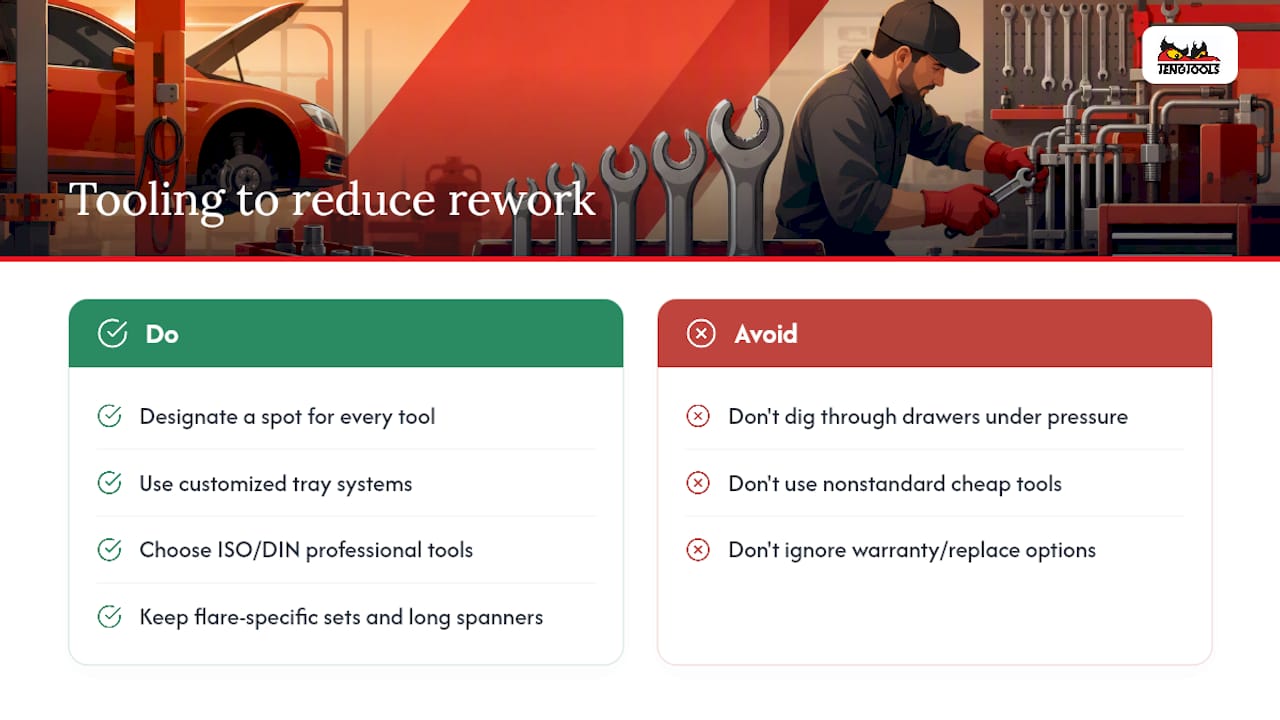
A flare fitting job goes sideways as often from grabbing the wrong tool under time pressure as from genuine mechanical failure. That’s less about skill and more about whether your tools have a designated spot you can find without digging.
A particular tool manufacturer builds its lineup around that exact problem. Their customized tray system gives every tool a visible home, so a crowfoot or flare wrench that’s out of place is obvious at a glance rather than buried in a drawer. Many professional tools are built to ISO and DIN standards, often with warranty coverage and prompt shipping options to support replacements when needed.
For flare fitting work specifically, a set like the Teng Tools Nut Driver & Hex/TX T-Handle Set handles the smaller fasteners you’ll hit around brake and fuel components, while a long double ring spanner set rounds out your backup-wrench options for holding fittings steady during the exact technique described above.
My Checklist for Confident Flare-Fit Work
Before I touch a flare fitting, I run through the same short sequence every time. Confirm the size matches the wrench, metric or SAE, before it ever touches the nut. Seat the wrench fully and check it’s flush against the flats, not riding on two corners. Grab a backup wrench on the fitting body before applying any real force. Torque to spec, then pressure-test or visually recheck before calling the job done. The habit that saves the most time isn’t a technique at all. It’s keeping your line wrenches in one dedicated spot so you’re never digging through a drawer while a customer’s car sits on the lift.
— David
Building Out Your Flare Wrench Kit
There are other ways to tackle flare fittings in a pinch, including adjustable wrenches or even a well-seated open-end in low-torque situations, but neither gives you the grip or repeatability a dedicated flare wrench set delivers on soft brass and steel fittings day after day.
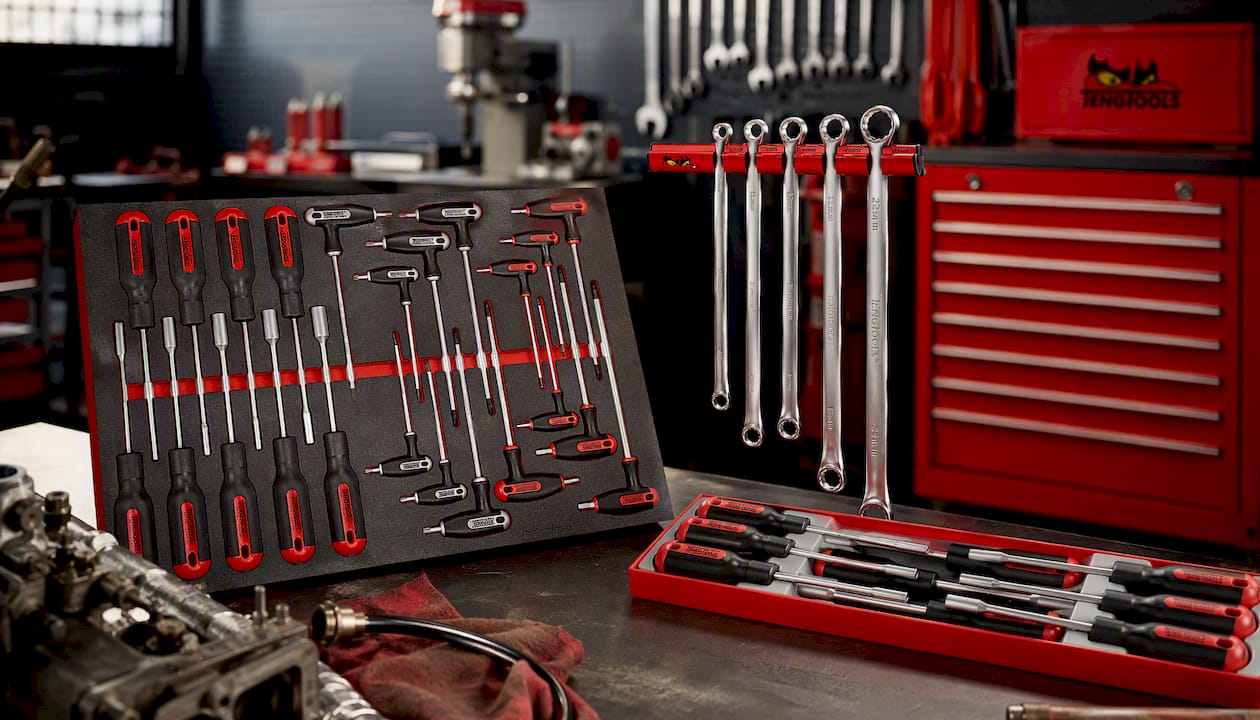
Teng Tools is built for exactly this kind of repeat, precision work. The Teng Tools Nut Driver Set TTX4 rounds out a shop kit for smaller fittings you’ll hit alongside brake and fuel line work, and every piece ships with a lifetime warranty backing it. If you’re outfitting a mobile rig or a home garage, an impact socket set pairs well with your flare wrenches for the fasteners surrounding the fitting itself. Browse the current lineup and place an order today. With same-day shipping from the Fort Worth warehouse, your next flare fitting job doesn’t have to wait on a tool you don’t have yet.
Sources
For readers who want to go deeper on technique and terminology, the Wikipedia entry on flare-nut wrenches covers definitions and crowfoot variants concisely. The Mech Forged size chart is a handy reference for matching sizes to systems, and the garage forum discussion on flare wrenches versus open-end offers real shop perspective on the backup-wrench habit.
- Why do you need to use a flare nut wrench instead of the open part of a combination spanner?
- How to tighten HVAC line set flare nuts without leaks
- Flare Nut Wrench Size Chart: Complete Guide - Mech Forged
- How to use crowfoot flare-nut wrench
FAQ
Do I need a flare nut wrench?
If you work on brake, fuel, hydraulic, or refrigerant lines, yes. The added contact area prevents rounding soft fittings that an open-end wrench will chew up under repeated use.
What is the purpose of a flare nut?
A flare nut compresses a flared tube end against a matching fitting to create a metal-to-metal seal without gaskets or sealant, commonly used in brake, fuel, and refrigerant lines.
Do I need a flare nut wrench for brake lines?
Yes. Brake fittings are frequently corroded from years of road exposure, and a rounded bleeder or line fitting often means drilling it out or replacing the part entirely.
What is another name for a flare nut wrench?
It’s commonly called a line wrench, and the drive-mount version used with a ratchet or torque wrench is known as a crowfoot flare-nut wrench.