
A mechanic tool set in the US costs roughly $50 to $120 for a 40 to 60-piece starter kit, $150 to $300 for a mid-range 90 to 120-piece set, and $500 or more for a professional assortment with 150 pieces or more, according to one 2026 buying guide. Piece count is only part of the story. Ratchet quality, steel, drive-size coverage, warranty and storage decide whether a set is a fair price or a bad one.
This guide breaks the cost down by tier, shows what actually moves the price, and explains how to build a set around the work you do instead of a number on the box.
TL;DR
- Expect about $50 to $120 for a starter kit, $150 to $300 for a mid-range set, and $500+ for a full professional set.
- Ratchet mechanism, steel grade and storage push prices up more than extra pieces do.
- Cover 1/4-, 3/8- and 1/2-inch drives first, then add targeted tools instead of buying a huge set you will not use.
- Our Mecca Pro Series starts at $189 and our PRO35 Kits start at $649, both backed by a lifetime warranty.
- Government buyers should verify country of origin against the Trade Agreements Act before ordering.
Table of Contents
- Mechanic tool set prices by tier
- What actually drives the price
- Piece count is a poor way to compare
- How to buy for your work without overpaying
- Our perspective: the cost of a tool you cannot find
- Where our sets fit
- Ready to build your set?
- Costs for repair shops and institutional buyers
- A simple budget formula
- FAQ
- Sources
Mechanic tool set prices by tier
Prices vary by retailer and change often, so treat these as ranges, not quotes. Here is how the market breaks down in 2026.
| Tier | Typical size | Typical price | Who it fits |
|---|---|---|---|
| Starter | 40 to 60 pieces | $50 to $120 | Homeowners, occasional repairs |
| Mid-range | 90 to 120 pieces | $150 to $300 | Serious DIYers, apprentices |
| Professional | 150+ pieces | $500 and up | Working techs, shops, fleets |
The ranges above come from a 2026 tool set buying guide. Other guides cut the tiers slightly differently, but they land in the same neighborhood: a few dozen dollars to get started, a few hundred for a set that lasts, and into the high hundreds or thousands for a full professional outfit.
Top-end pricing can climb well beyond that. A 127-piece set from a well-known American tool brand was listed at $675 in a 2025 roundup, and complete rolling storage packages with hundreds of pieces run into the thousands.

Starter kits: $50 to $120
A starter kit usually holds a ratchet, a run of sockets in SAE and metric, a few extensions, and sometimes a handful of screwdrivers or pliers. It handles brake pads, oil changes, battery swaps and basic bolt-on work.
The tradeoff is in the details. Ratchets in cheap kits tend to have fewer teeth, sockets are thinner, and the case is molded plastic with loose compartments. If you wrench a few weekends a year, that can be fine. If you use the tools daily, you will replace them.
Mid-range sets: $150 to $300
This is where most serious DIYers should shop. You get all three common drive sizes, better steel, a ratchet with a smoother mechanism, and a case that keeps sockets in order. If you want one purchase that covers most jobs on a driveway or in a small garage, this is the band to aim for.
Professional sets: $500 and up
A professional set is built for daily use. Expect deep and shallow sockets in every size you reach for, impact sockets, ratcheting wrenches, hex and Torx keys, and storage meant to be carried between bays or into a mobile van. Price climbs fast here because of tool quality, not just count.
What actually drives the price
Two sets with the same piece count can differ by hundreds of dollars. The same guide points to premium ratchet mechanisms, harder steel and storage systems such as modular cases as the main drivers. Here is what each one means at the bench.

Ratchet mechanism
A higher tooth count means a smaller swing arc to engage the next tooth, which matters in tight engine bays. One 2025 review of a 140-piece set noted two 144-tooth ratchets with a 2.5-inch arc swing. Fine-tooth ratchets cost more to machine and hold up longer when the internals are well made. If you want a deeper look at what to check in a shop-grade ratchet, see our ratchet review for professional shop work.
Steel and finish
Chrome vanadium steel is the common standard for sockets and wrenches. Better heat treatment and tighter machining tolerances mean sockets that grip fasteners cleanly instead of rounding them. Tools made to ISO and DIN dimensional standards fit predictably, which is part of why we build ours that way.
Drive-size coverage and socket range
A set that stops at 3/8-inch drive will leave you borrowing tools for suspension and axle work. Check that metric sizes run continuously, with no gaps at 11, 13 or 17 mm, for example. Buyers should compare drive-size coverage, continuous metric socket sizes, ratchet quality, CrV steel, warranty terms and storage, not only the number printed on the box.
Storage
Storage is the most underrated line on the price tag. A case with loose sockets rattling around costs you time every time you reach for a tool. A tray with a cut-out for every tool shows what is missing at a glance. We cover how that adds up in how a modular tool storage system saves time.
Warranty
A lifetime warranty changes the real cost. A tool that gets replaced when it fails is cheaper over ten years than a tool that is cheap today and gone next season. Always read what the warranty covers and how replacement works before you compare sticker prices.
Piece count is a poor way to compare
A 250-piece set can be mostly bit tips, small accessories and duplicate fasteners. A 113-piece set built around sockets, ratchets and wrenches may hold more of what you actually use.
Before comparing prices, count the pieces that matter:
- Ratchets and drive sizes (1/4, 3/8, 1/2 inch).
- Sockets, split into shallow, deep and impact, SAE and metric.
- Wrenches, extensions, universal joints and adapters.
- Screwdrivers, hex keys and Torx keys.
- Pliers and cutters.
Divide the price by the number of tools you will use in a normal month, not by the total piece count. That number makes budget sets look less cheap and good sets look more reasonable.
How to buy for your work without overpaying
The cheapest way to buy tools is to buy the right ones once. Match the set to your tasks, prioritize 1/4-, 3/8- and 1/2-inch drive coverage, and choose storage that can grow with targeted additions, as the same buying guide recommends.
A practical path:
- Weekend DIY: a mid-range set with all three drive sizes. Add a torque wrench when you start doing brakes and wheels.
- Apprentice or new tech: start with a core set, then add specialty tools as jobs demand them. Our mechanic tool set essentials guide explains why three drive sizes come first.
- Working professional: buy a set with strong ratchets and storage that holds up daily, then fill gaps with individual sockets, wrenches and pliers.
- Mobile mechanic: weight and security matter as much as price. See mobile mechanic tool storage that holds up.
For a sense of scale in another trade, one HVAC apprenticeship guide puts entry-level toolkits at $800 to $1,600 and professional kits at $1,600 to $3,500 or more. Automotive hand tools are generally less expensive than that, but the pattern is the same: the cost of a professional outfit builds over time, and the buyers who spend well are the ones who plan the purchase.
Our perspective: the cost of a tool you cannot find
Most price guides stop at the receipt. We think the real cost of a tool set includes the time you lose looking for tools, and the money you spend replacing the ones that went missing.
That is why we built the Get Organized™ system around a simple idea: every tool gets a designated home in a tray, and trays click together so the layout fits your work. When a socket is missing, you see the empty cut-out before the job starts, not halfway under a car. For shops that care about tool control, that visual check is the point.
We design our tools in Sweden to ISO and DIN standards, and every tool is backed by a lifetime warranty. Our pricing starts at $189 for the Mecca Pro Series, $649 for PRO35 Kits and $89 for Portable Storage. We would rather you spend that money once on tools and trays that stay organized than buy a bargain set that breaks your rhythm every time you open the case.
If you are comparing a mid-range set to a professional one, ask what happens on day 1,000. Does the ratchet still feel crisp? Can you tell at a glance if something is missing? Is the warranty simple? Those answers tell you more than the piece count.
— David
Where our sets fit
Our range covers sockets, impact sockets, ratchets, wrenches, torque wrenches, screwdrivers, pliers and more, so you can start with a kit and add single tools in the same tray system. A few starting points:
- The Mecca Pro TC-9 TT tool kit with 113 pieces is a compact professional kit built around our tray system.
- The 187-piece barn-style tool kit gives you a larger assortment in a single box.
- The 15-piece general service set is a simple garage and DIY entry point.
For a wider view of how kits stay organized in daily use, read our guide to professional automotive tool kits that stay organized.
Ready to build your set?
Browse the Mecca Pro Series, PRO35 Kits, Portable Storage and the rest of our range to see current pricing. We ship same-day from our Fort Worth, Texas warehouse.
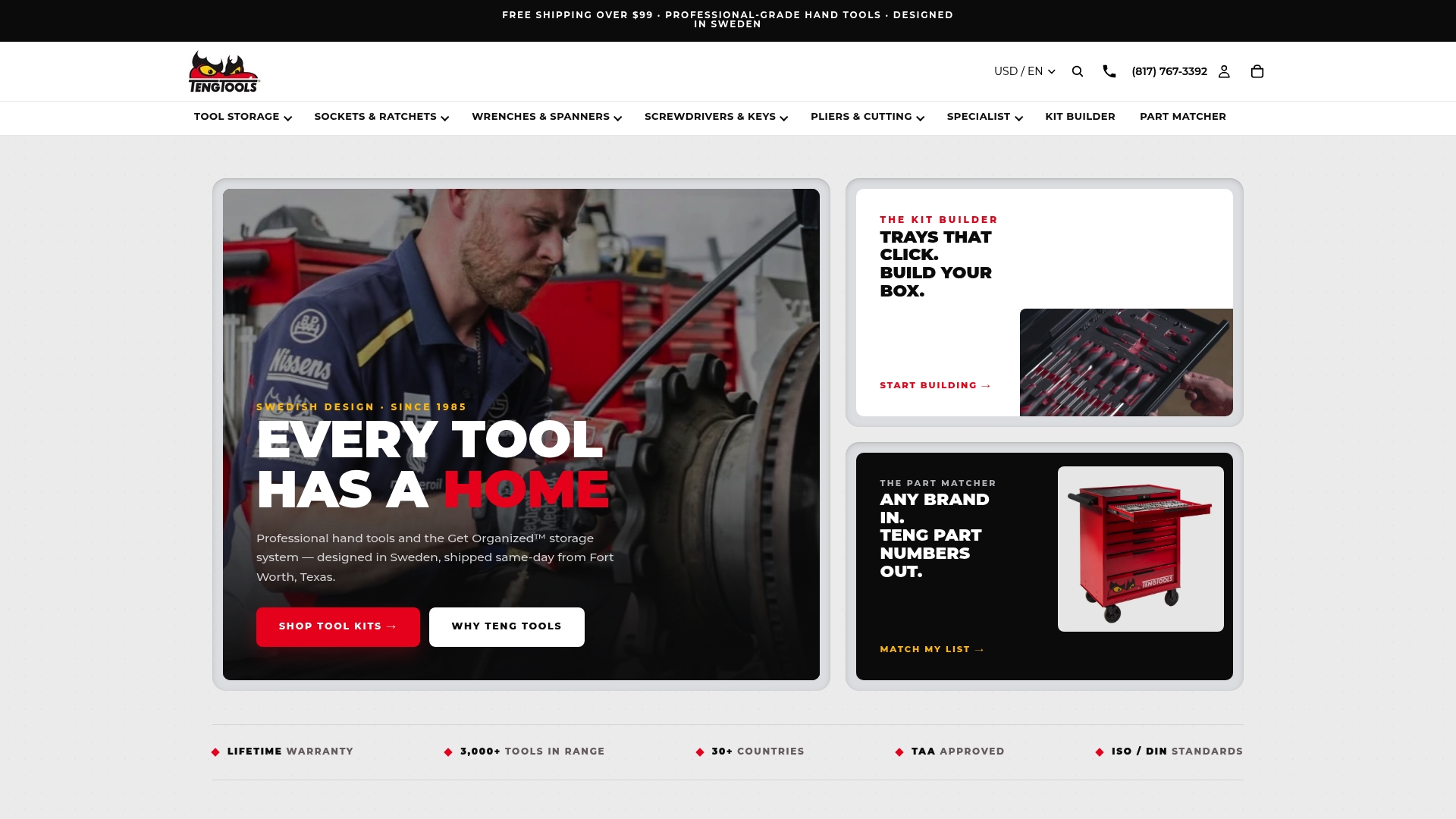
If you want to add trays to tools you already own, our tool sets for TT tool kits are a straightforward way to extend the system as your work grows.
Costs for repair shops and institutional buyers
For a shop, tool cost is one line in a bigger picture. Lost tools, duplicate purchases and missing materials all show up in the books. Good stock control matters as much for consumables and parts as it does for hand tools, and this guide to stock control in repair shops covers the materials side of that picture. For the tools themselves, a tray with a place for each one makes a daily inventory check a matter of looking, not counting.
Facility maintenance managers and government buyers also need to confirm compliance before ordering.
Checking TAA compliance
Contracts such as GSA Multiple Award Schedule contracts are subject to the Trade Agreements Act. Under it, products must be manufactured or substantially transformed in the United States or a designated country. GSA publishes an official lookup of Trade Agreements Act designated countries, and you should check it for the country of origin of any set you plan to buy.
Before you order, verify these points:
- The country of origin for each set, not just the brand’s home country.
- That the product listing states TAA status clearly.
- That your contract language requires TAA compliance, since not every purchase does.
- That bulk pricing and warranty terms are confirmed in writing.
We offer TAA-approved options for institutional buyers. Contact us through the site to confirm the specific product and quantity you need.
A simple budget formula
If you are not sure how much to spend, work backward from the jobs you do.
- List the five jobs you do most.
- Write down the drive sizes and socket ranges they need.
- Price a set that covers those tools with good ratchets.
- Add storage that keeps them organized.
- Add specialty tools only when a job demands them.
This keeps you from paying for 100 pieces you will never touch, and it leaves room in the budget for the tools you will use every day.
FAQ
How much should I spend on a mechanic tool set?
Homeowners can start at about $50 to $120, serious DIYers should look at $150 to $300, and working professionals should plan for $500 or more. Spend more on ratchets, sockets and storage than on extra accessories.
Is a bigger set always a better value?
No. Large sets often include many small accessories you rarely use. Compare the number of sockets, wrenches and ratchets you will use, and check the drive sizes, steel and warranty.
Are professional mechanic tool sets worth the extra cost?
If you use them daily, yes. Better ratchets, harder steel and a lifetime warranty reduce replacements, and organized storage saves time on every job. Our professional sets are built with that daily use in mind.
What drive sizes should a mechanic set include?
Look for 1/4-inch, 3/8-inch and 1/2-inch drive coverage. Together they handle interior and small fasteners, general engine work, and suspension and wheel jobs.
What should government buyers check for TAA compliance?
Confirm the country of origin against the official GSA list of designated countries, make sure the listing states TAA status, and confirm your contract requires it. Ask the seller to document it for bulk orders.
Sources
- How to Choose a Mechanics Tool Set with a Foam Organizer
- 12 Of The Best Mechanic Tool Sets For Every Budget
- DeWalt ToughSeries 140-Piece Mechanics Tool Set review
- Best Mechanic Tool Sets for Professional Shops
- HVAC Tool Investment Cost: What to Expect as an Apprentice
- TAA Compliant Countries
- GSA: Look up Trade Agreements Act-designated countries