
For most mobile mechanics, the fastest and most durable setup combines modular drawer units, foam tool trays, and a small portable tool panel for daily essentials. That mix gives you secure mounting, instant visual checks on missing tools, and weather and theft protection without slowing you down between jobs. The approach uses a modular tray concept that allows every tool to have a designated home for quick visual checks and improved organization.
TL;DR:
- Modular drawer units should be placed at waist or chest height for rapid access, with heavier tools positioned low and towards the front of the vehicle.
- Weigh your vehicle with full tool loads and check bolt torque regularly, especially after 500 miles, to prevent loosening and ensure safety.
- Foam trays with custom cutouts improve tool visibility and reduce loss, and labeling bins by task speeds up daily routines.
- Heavy-duty steel framing with corrosion-resistant coatings is best for durability, while lockable drawers and window barriers enhance security on the road.
- Routine checks of fasteners, latches, and slides weekly or monthly help maintain system integrity and prevent tool loss or damage.
Table of Contents
- What Are the Main Types of Mobile Mechanic Storage?
- How Should You Set Up Storage for a Van vs. a Pickup?
- How Do You Keep Small Parts and Tools From Getting Lost?
- What Materials and Hardware Hold Up Best in a Service Vehicle?
- What Daily and Weekly Routines Keep Storage Reliable?
- Why Modular Tray Systems Outperform Loose Storage
- What Working Mechanics Learn the Hard Way
- Get Your Mobile Setup Organized With Teng Tools USA
- Sources
- FAQ
What Are the Main Types of Mobile Mechanic Storage?
Every mobile mechanic storage setup is really a combination of a few core building blocks, and picking the right mix matters more than picking any single “best” product.
- Drawer units hold hand tools and small parts, keeping everything visible and dust free. They’re the fastest to access but eat into vertical space.
- Shelving works for bulky items like fluid jugs, cases, and spare parts. It’s cheap and easy to reconfigure but offers no protection from vibration or theft.
- False floors hide rarely used or high-value gear under a flat work surface. You get large hidden capacity, though false floors work best when daily loads vary rather than staying constant.
- Portable boxes and tool panels travel with you to the job site itself, cutting trips back to the van.
The placement rule that separates a good setup from a frustrating one: keep whatever you touch ten times a day at waist or chest height, and push everything else lower or further back.
How Should You Set Up Storage for a Van vs. a Pickup?
Before you bolt anything down, run the numbers. Overloading a van or service body past its gross vehicle weight rating (GVWR) or rear axle rating isn’t just a fine waiting to happen. It changes how the vehicle brakes and handles, especially fully loaded on a highway on-ramp. Weigh your rig with a full tool load before finalizing shelving placement.
Mounting matters just as much as weight. Anchor points need to tie into the vehicle’s actual structure, not just the interior panel skin. Rated anchor points and anti-rattle latches keep heavy drawers from becoming projectiles during a hard stop.
A workable layout follows a simple sequence:
- Put the heaviest components (drawer units, power tool cases) low and as far forward as the platform allows.
- Place your highest-use drawers and trays near the side or rear doors.
- Keep a central aisle open if you need to walk into the cargo area rather than reach from outside.
- Add sliding drawers or pull-out trays anywhere depth would otherwise force you to climb in and dig.
Van shelving and pickup service bodies solve this differently. A van gives you continuous wall space for shelving and drawer units built for reachability, while a service body’s compartments favor false floors and slide-out trays accessed from the exterior.
Pro Tip: Torque check every hard-mounted anchor bolt after the first 500 miles of driving. Vibration loosens fasteners faster than most techs expect, and a quarter turn now beats a dropped drawer on the interstate.
How Do You Keep Small Parts and Tools From Getting Lost?
Foam trays and shadow boards solve the single most common complaint among mobile mechanics: not knowing a tool is missing until you need it. A foam cutout with an empty slot is visible from three feet away. A pile of loose sockets in a drawer bottom is not.
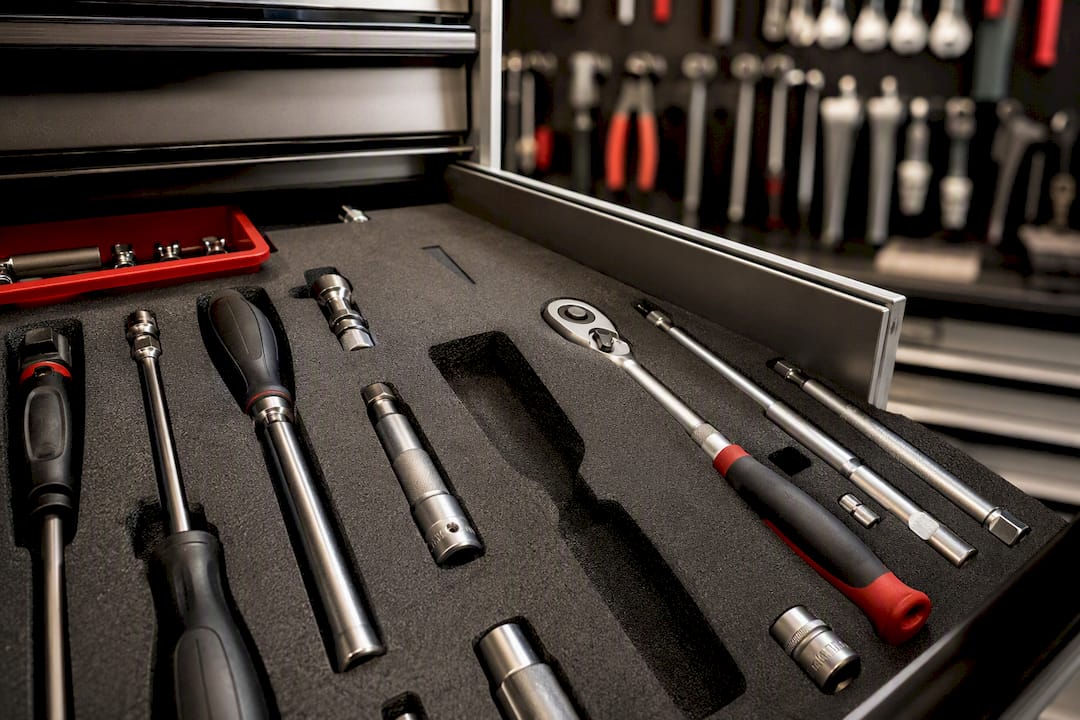
Drawer depth should match what’s inside it. Shallow drawers suit hand tools and foam-tray layouts; save deep drawers for power tool cases and bulkier equipment. Some heavy-duty drawer units support individual drawer loads in the 25 to 40 kilogram range, so match tool weight to drawer rating rather than guessing.
A few habits speed up multi-call days:
- Label bins by task (brakes, electrical, diagnostics) instead of by tool type alone.
- Size bins to the smallest common part you carry, not the largest.
- Keep a prepacked portable tool panel loaded with daily essentials so you’re not repacking every morning.
- Store that panel near the door you use most, not buried behind bulk stock.
For more detail on labeling systems that hold up over months of daily use, see this breakdown of organizing mechanic tools for faster work.
What Materials and Hardware Hold Up Best in a Service Vehicle?
Steel framing handles heavier drawer loads and takes abuse better over years of daily use. Aluminum framing weighs less, which matters if you’re already close to your GVWR limit. Either way, reinforced framing paired with corrosion-resistant coatings resists the rust that road salt and coolant spills cause over time.
Hardware choices that actually matter on the road:
- Positive-closing latches that won’t vibrate open on rough pavement.
- Lockable drawers on anything holding diagnostic equipment or power tools.
- False floors used specifically to conceal high-value items from a quick break-in glance.
- Window and bulkhead barriers that block visibility into the cargo area from outside.
Drawer Load Reality Check: Heavy-duty drawer units commonly rate individual drawers in the 25 to 40 kilogram range. Match your heaviest tool sets to drawers rated at the top of that range, and keep lighter items in shallower drawers higher up.
What Daily and Weekly Routines Keep Storage Reliable?
A storage system is only as good as the checks you run on it. Build these into your routine rather than treating them as extra work:
- End of day: Scan shadow boards and foam trays for open slots before locking up.
- Weekly: Check torque on drawer anchor bolts and hinge hardware, and confirm latches close fully on the first try.
- Weekly: Verify battery charge on cordless tools kept in cases rather than charging stations.
- Monthly: Inspect drawer slide operation and fastener torque across the whole rig, not just the drawers you use most.
For multi-call days, keep a second prepacked portable panel or duplicate small parts kit ready to swap in. It saves you from digging through a half-empty main kit between the third and fourth job of the day.
Why Modular Tray Systems Outperform Loose Storage
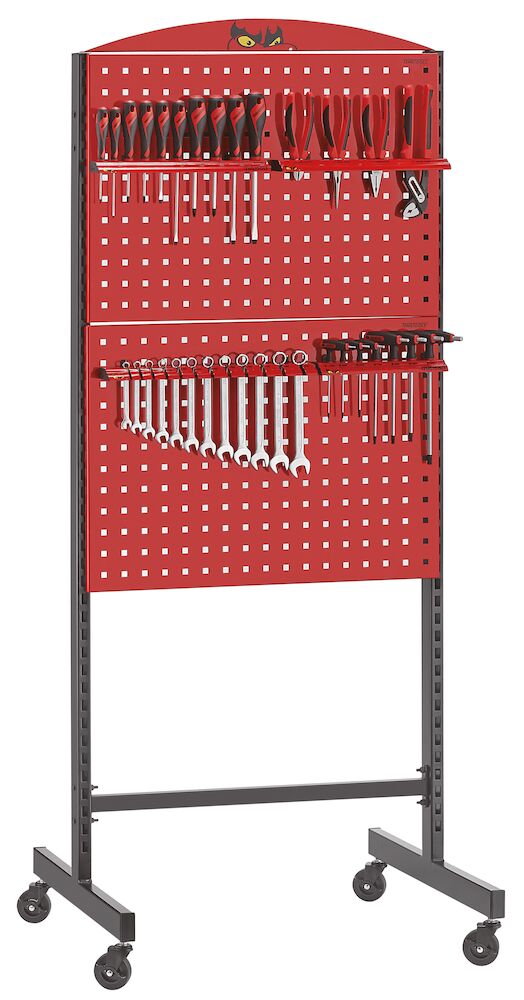
A modular tray system solves the “where did that go” problem before it starts. A modular tray system clicks together and gives every tool a designated foam cutout, so a missing wrench shows up as an empty slot rather than a five-minute search through a drawer. That’s the same principle behind modular storage systems that save time on daily checks.
A few practical points worth knowing:
- Every kit is built to ISO and DIN standards, so replacement pieces fit the same tray without reshuffling your layout.
- Kits offer a lifetime warranty, with fast shipping options available when you need a replacement.
- The Teng Tools Mobile Tool Panel Tool Kit (TPT01) is sized to sit inside a drawer system or ride along separately as a grab-and-go panel for the day’s first call.
- Trays swap in and out of drawer units without tools, which matters when your job mix changes week to week.
What Working Mechanics Learn the Hard Way
Most mechanics redesign their layout at least once after realizing their first setup put the wrong tools up front. A tech who wires in a fixed shelving grid on day one often rips half of it out within a year once the actual call mix becomes clear.
The real tradeoff is capacity versus access, and budget versus durability. Cheap drawer slides fail faster under daily vibration than rated hardware does. Build for iteration: start with a core layout, track what you reach for most, and adjust the trays and bins around real usage rather than a guess made in a parking lot on day one.
— David
Get Your Mobile Setup Organized With Teng Tools USA
Using a professional organized tool kit can provide a faster path to an organized rig than building a DIY foam-and-bin system from scratch. The Mobile Tool Panel Tool Kit (TPT01) packs 33 pieces into a single portable panel built for daily essentials and quick swaps between jobs, and it drops straight into an existing drawer system or false floor setup without any custom fitting.
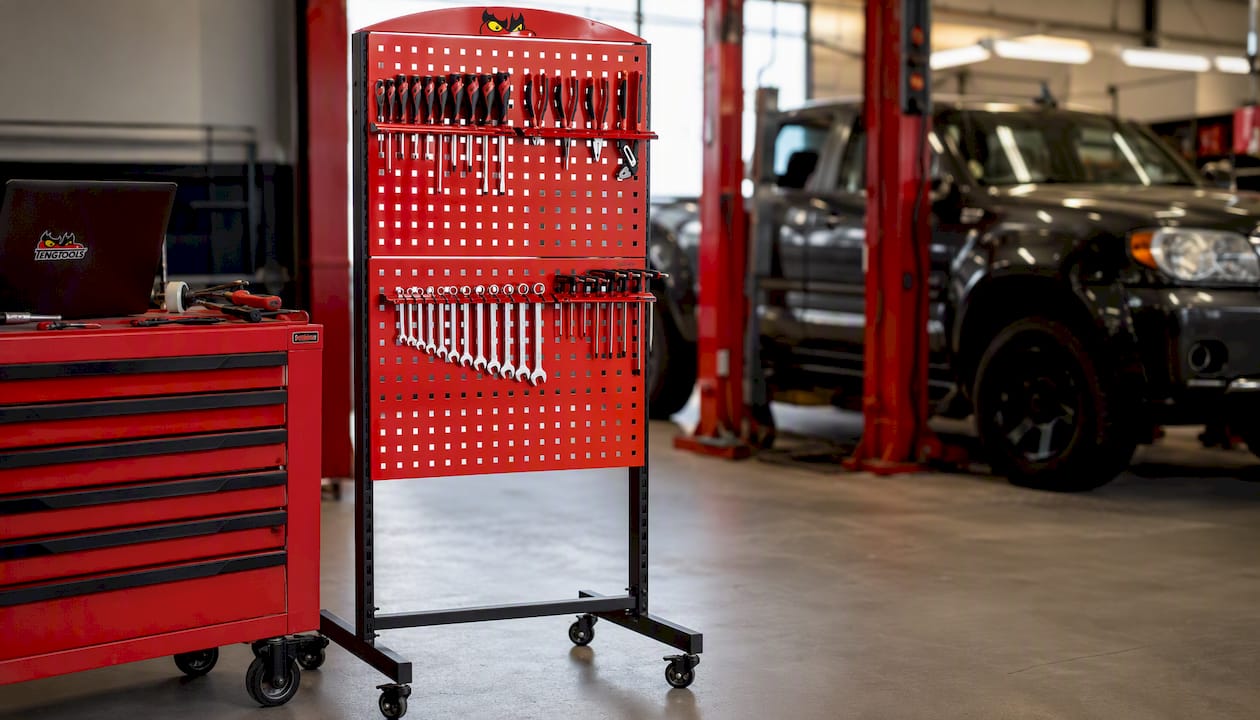
If you’re already running fleet GPS or telematics on your service vehicle, pairing that setup with hardwired tracking adds an additional layer of security on top of lockable drawers and concealed false floors. For the rest of your kit, Teng Tools USA’s full product catalog covers everything from Portable Storage starting at $89 to complete Roller Cabinets and Tool Boxes, all backed by a lifetime warranty. Ordering such kits online often includes fast shipping options to get them quickly to your bench.
Sources
- How to Design Van Shelving That Holds Up on Real Job Sites - Measurevan
- Mobile Mechanic Truck Setup: Tips & Tools for Pros on the Go
- Van-safe tool storage: secure, organized vans — OZK Customs
FAQ
What Is the Best Storage Solution for a Mobile Mechanic?
The best mobile mechanic storage combines modular drawer units for hand tools, foam trays for visual tool checks, and a portable tool panel for daily essentials. This mix balances fast access with the durability and security a service vehicle needs on the road.
How Much Should a Mobile Mechanic Charge Per Hour?
Rates vary widely by region, specialty, and whether the work involves diagnostics or routine repair, so there’s no single industry-standard figure to quote here. Check local competitor pricing and your own overhead, including fuel, tool investment, and insurance, before setting a rate.
How Can I Organize My Mechanic Garage or Van?
Start by grouping tools by task rather than type, and place whatever you use most within one reach-step of your main access point. A modular tray system speeds this up because each tool has a fixed foam slot, making a missing item obvious at a glance.
How Much Does It Cost for a Mobile Mechanic to Come Out?
Call-out fees depend heavily on location, distance, and the shop or independent technician involved, so there’s no fixed national rate to cite. Most mobile mechanics quote a service call fee separately from labor and parts, so ask for both before booking.
What Should Go in a Portable Tool Panel?
A portable tool panel should carry the tools you reach for on nearly every call: common sockets, screwdrivers, pliers, and a ratchet. The Teng Tools Mobile Tool Panel Tool Kit (TPT01) packs 33 of these essentials into one panel sized for exactly this use.