
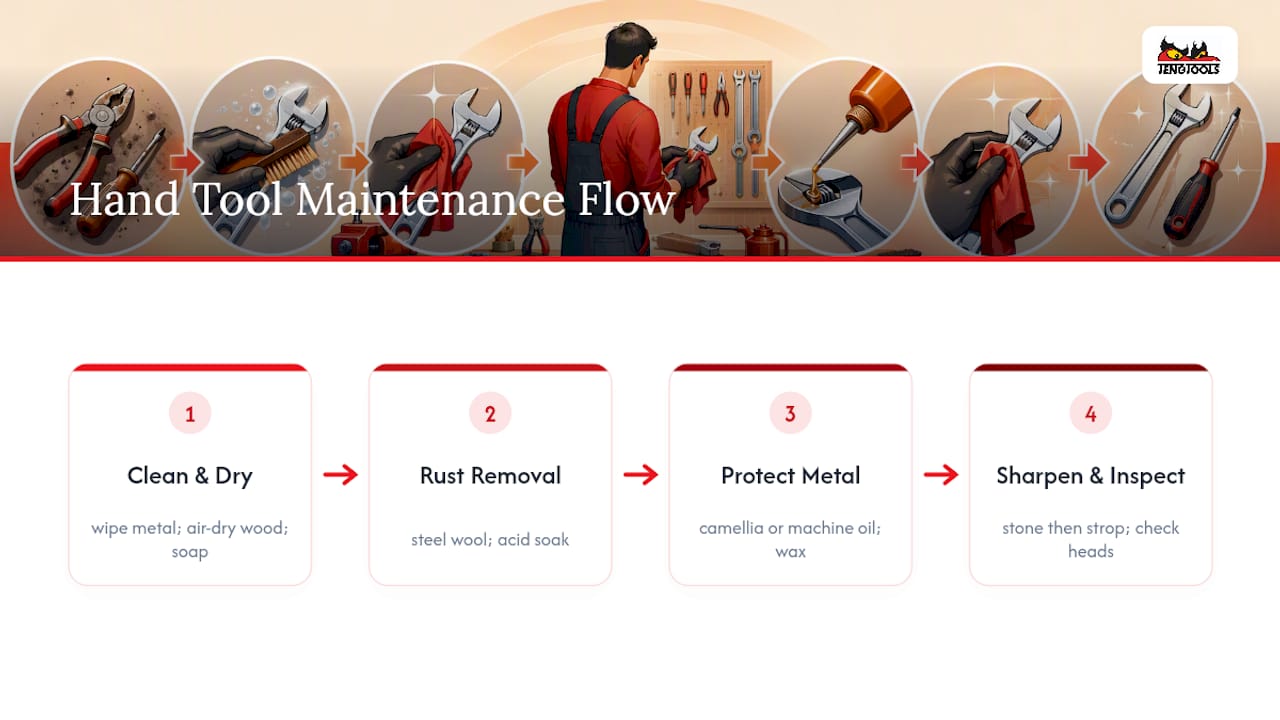
Wipe and inspect every tool after use, lubricate moving parts weekly, sharpen and replace worn parts monthly, and run a full inventory audit each season. That’s the cadence that keeps hand and power tools working the way they should. Build your routine around seven categories: clean, inspect, lubricate, sharpen or replace, check electrical safety, store properly, and track what you own.
- Clean and dry immediately after use
- Inspect before every job, not after something breaks
- Lubricate pivots, chucks, and slides weekly
- Sharpen blades and replace worn parts monthly
- Store in a designated spot, every time
Tengtoolsusa builds tools to ISO and DIN standards, which sets the baseline quality this checklist is designed to protect.
Key Takeaways
Consistent daily cleaning and inspection, paired with weekly lubrication and a tracked storage system, prevents most tool failures and loss before they happen.
| Point | Details |
|---|---|
| Daily habit beats seasonal push | Wipe, dry, and inspect after every use rather than relying on one big cleaning session. |
| Match protection to material | Use oil or paste wax on metal, never soak wooden handles, and skip WD-40 for long-term rust protection. |
| Cut power before servicing | Unplug corded tools or remove batteries before inspecting cords, brushes, or vents. |
| Track tools like inventory | Tag, register, and audit tools regularly to catch losses before replacement costs pile up. |
| Storage design drives compliance | Teng Tools’ WR8012 rack, TTTM08 inspection set, and TSC8R1D cupboard give each tool a designated home that makes the checklist easier to follow. |
Table of Contents
- What Should a Tool Maintenance Checklist Include?
- How Do You Maintain Hand Tools Properly?
- How Do You Maintain Power Tools Safely?
- How Do You Stop Tools From Getting Lost or Stolen?
- What Does a Maintenance Schedule Template Look Like?
- Where the Standard Advice on Tool Maintenance Falls Short
- Put the Checklist Into a Tool Setup That Holds Up
- Sources
- FAQ
What Should a Tool Maintenance Checklist Include?
A working checklist has four cadences: daily, weekly, monthly, and seasonal. Miss one tier and small problems compound into replacement costs. A preventive maintenance checklist should cover inspections, cleaning, lubrication, power source checks, worn-part replacement, and a written record of what was done.
Daily (after every use):
- Wipe down metal surfaces and dry them fully before storage.
- Check for visible cracks, chips, or loose parts before the tool goes back on the rack.
- Return the tool to its designated spot in the tray, rack, or drawer.
Weekly or after heavy use:
- Lubricate pivots on pliers, snips, and adjustable wrenches.
- Clear dust and debris from power tool vents and housings.
- Check battery charge levels and inspect cords for nicks or fraying.
Monthly:
- Sharpen chisels, blades, and cutting edges that have seen regular use.
- Replace consumables: sanding discs, blades, brushes, and worn grips.
- Test calibration on torque wrenches and measuring tools against a known standard.
Seasonal (quarterly, minimum):
- Treat wooden handles with linseed oil or a similar conditioner.
- Deep-clean storage units, trays, and cabinets.
- Run a full inventory audit against your tool register and reconcile any gaps.
A seasonal maintenance schedule built on these four tiers catches wear before it turns into a failed job or an unsafe tool. Print this breakdown, tape it inside your cabinet door, and check items off as you go. The friction of a paper checklist is lower than any app when you’re standing at a bench with grease on your hands.
How Do You Maintain Hand Tools Properly?
Hand tools fail for three reasons: dirt left to harden, moisture left to rust, and edges left to dull. Each has a specific fix depending on the material you’re working with.
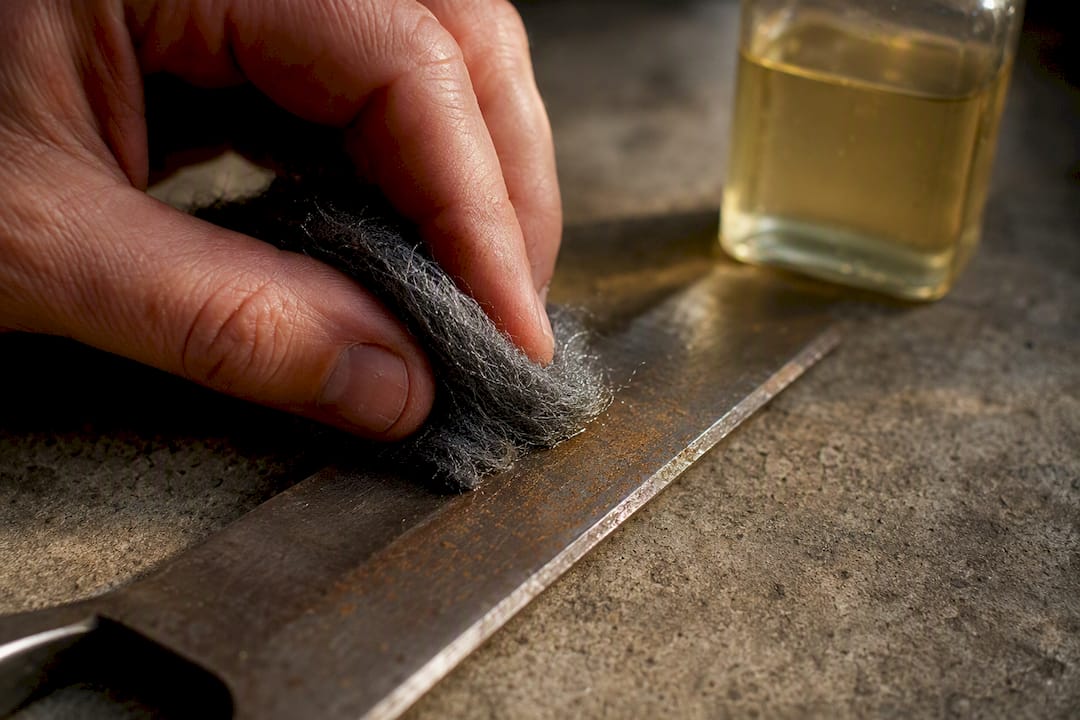
Metal parts get wiped with a dry cloth after every use, then a light coat of oil if they’ll sit unused for more than a few days. Wooden handles never get soaked. Water swells wood fibers and loosens the head from the handle, so wipe them and let them air dry instead. Composite handles tolerate mild soap and water but skip solvents, which can degrade the resin over time.
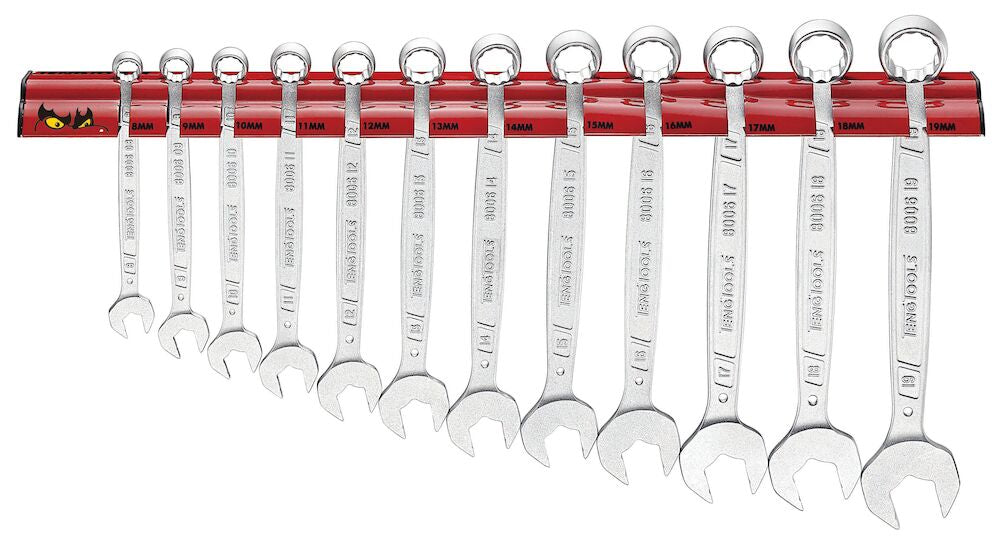
Rust removal depends on severity. Light surface rust comes off with fine steel wool. For pitted or high-carbon steel tools, chelating agents or a mild acid soak followed by neutralization work better than aggressive sanding, which can alter the tool’s original tolerances. Once clean, protect the metal with camellia oil, light machine oil, or paste wax rather than WD-40, which evaporates too quickly to provide lasting corrosion resistance.
Sharpen blades and chisels when they start slipping instead of biting into material. Work the edge across a stone at a consistent angle, then finish with a leather strop to remove the burr. Check ferrules and wedges on hammers and axes regularly. A loose head is a safety hazard, not a cosmetic issue, and cracked wooden handles get replaced, not glued.
Pro Tip: Keep a small tin of paste wax next to your bench. A thirty-second wipe on bare metal after each use does more for rust prevention than a monthly deep-clean session.
How Do You Maintain Power Tools Safely?
Power tools carry a different risk profile than hand tools, so every maintenance step starts with cutting power. Unplug corded tools or remove the battery before you touch a blade, brush, or vent. Skipping this step around exposed energized wiring is one of the more preventable causes of shop injuries.
- Inspect cords and cable insulation for cracks, kinks, or exposed conductors before every use.
- Store batteries at partial charge, away from extreme heat or cold, and watch for swelling or a sudden drop in run time.
- Clear dust from vents and motor housings weekly; a clogged motor runs hot and wears out faster.
- Replace carbon brushes once they wear down, and let tools cool fully after heavy-duty cuts.
A checklist built on OSHA-aligned inspection points catches the failures that cause the most downtime: worn cords, swollen battery packs, and overheating motors. Replace blades, belts, and brushes on the schedule your manufacturer’s owner manual lists, and recalibrate any measurement tool that’s taken a drop or seen months of daily use. A five-minute cord check costs you nothing. A shock from a nicked cable costs a lot more.
How Do You Stop Tools From Getting Lost or Stolen?
Loss control is maintenance too. Tools that walk off a job site never get maintained at all.
Start with a simple register: unique ID, replacement cost, current location, and assigned custodian. Tag each tool with engraving, a QR or barcode label, or a durable marker depending on its value and where it’s used. Tagging combined with sign-out accountability catches losses before a tool disappears for good, and regular cycle counts flag gaps early instead of at year-end inventory.
| Control | Purpose |
|---|---|
| Tool register | Tracks ID, cost, location, and custodian for every asset. |
| Tagging (QR/barcode) | Speeds sign-out and audits, especially across multiple trucks. |
| Lockable storage | Reduces opportunistic theft on vehicles and job sites. |
| Sign-out log | Assigns accountability so tools trace back to a person. |
Locked chests and marked tools remain the strongest physical deterrent, but pair that with process controls. Physical security without a sign-out system just delays the loss instead of preventing it. Our guide on preventing missing tools in your shop walks through the audit cadence in more detail.
What Does a Maintenance Schedule Template Look Like?
A usable schedule has four columns: task, frequency, owner, and notes. Keep it that simple.
| Task | Frequency | Owner | Notes / Part # |
|---|---|---|---|
| Wipe down and inspect | After every use | Operator | Log damage on the spot |
| Lubricate pivots and chucks | Weekly | Operator | Use manufacturer-recommended oil |
| Sharpen edges, replace consumables | Monthly | Shop lead | Note blade/part numbers used |
| Calibrate torque wrenches | Quarterly | Supervisor | Escalate if overdue by 30+ days |
Set reminders through a shared calendar, a CMMS if your shop already runs one, or basic phone alarms tied to the schedule above. Whatever you use, record every action taken: condition at inspection, what was done, parts used, and the next due date. That log becomes your evidence trail when a tool fails and someone asks when it was last checked.
Why storage design changes how well you follow the checklist
A checklist only works if the tools have somewhere consistent to live. Teng Tools’ Get Organized™ trays give each tool a designated home, so a missing item is visible at a glance instead of discovered mid-job.
David, editorial lead: shops that pair a written cadence with a real storage home for every tool report fewer “where did it go” delays than those relying on memory alone.
Where the Standard Advice on Tool Maintenance Falls Short
Most maintenance guides treat cleaning and lubrication as the whole job. That’s half of it. The research on tool loss is just as clear: tagging, sign-out logs, and regular audits matter as much as a rust-free wrench, because a tool that walks off site never gets maintained at all. Shops that build both halves into one routine lose fewer tools and spend less on replacements than shops chasing rust with no tracking system behind it.
The overrated habit is deep cleaning on a big seasonal push while skipping daily wipe-downs. A consistent, low-effort daily habit beats an occasional deep clean every time, because rust and grime do their damage between sessions, not during them. If you only have time for one thing today, make it the sixty-second wipe-and-inspect after your last job, not a weekend overhaul.
What professionals get right that DIYers often skip is the paper trail. A written log turns “I think I checked that” into a fact you can point to when a tool fails or a client asks about safety compliance. Start there. The rest of the checklist gets easier once tools have a designated home and a record follows them.
— David
Put the Checklist Into a Tool Setup That Holds Up
A checklist works best when your tools already have a place to go back to. Tengtoolsusa’s Get Organized™ trays and racks turn “clean and return” from a habit you have to remember into a habit the setup enforces for you, since a missing tool shows up as an empty slot instead of a mystery three days later.
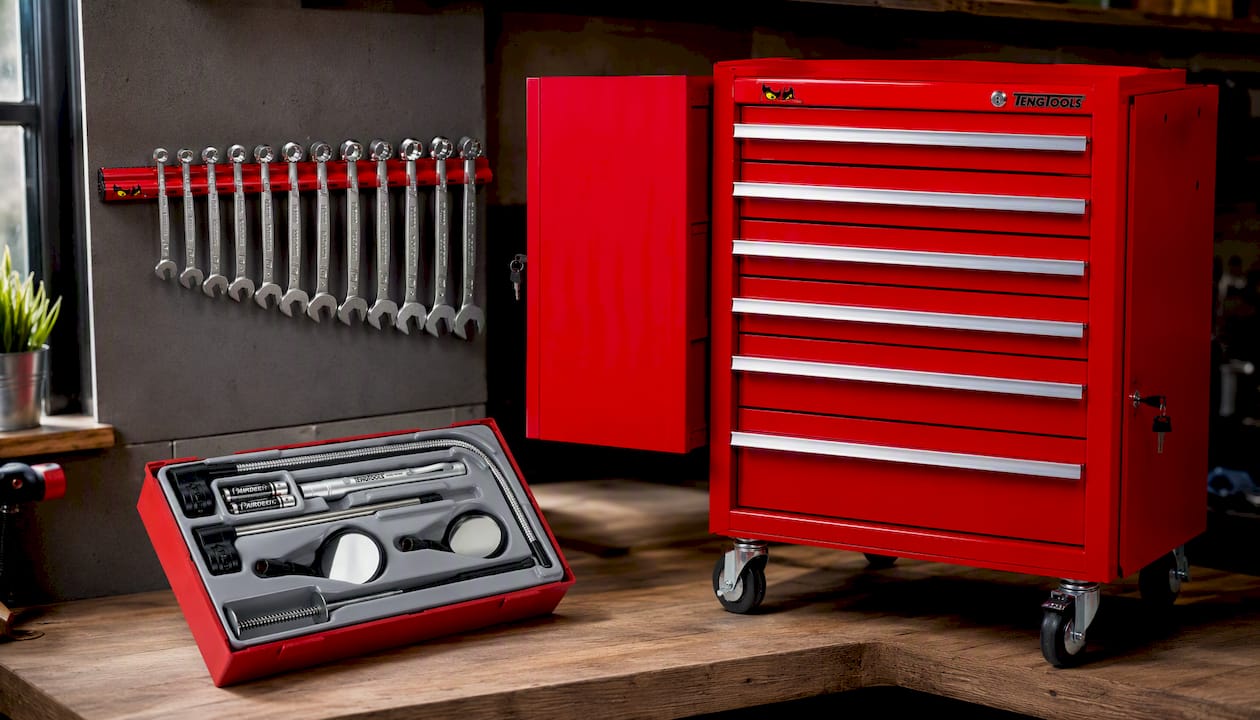
The WR8012 wall rack keeps a full spanner set visible and grabbable in seconds, which shortens the daily wipe-and-return step this checklist depends on. The TTTM08 inspection set gives you a compact kit built for the pre-use checks covered above, and the PRO35™ side cupboard gives your shop a lockable, audit-ready home for tools you’re tracking against a register. Every tool ships with a lifetime warranty and same-day shipping from the Fort Worth, Texas warehouse. If you’re ready to build a setup that makes this checklist stick, start with the wall rack or side cupboard and add the inspection set to round out your pre-use routine.
Sources
- Tool Equipment Maintenance Checklist Template
- How to Reduce Tool Loss on Site | MapTrack
- Safeguarding contractors: small tools and equipment — Munich Re
FAQ
What is proper tool maintenance?
Proper tool maintenance means cleaning tools after every use, inspecting them for damage, lubricating moving parts, and storing them in a designated, protected spot. It also includes tracking wear and replacing worn parts before they fail on the job.
What are the three most important rules of tool maintenance?
Clean and dry tools immediately after use, inspect them before the next job rather than after something breaks, and store them in a consistent, designated location every time. Skipping any one of these lets small problems turn into safety hazards or lost tools.
How do I write a maintenance checklist?
Organize tasks by frequency (daily, weekly, monthly, seasonal), and list the specific action, who’s responsible, and what to record for each. A structured template covering cleaning, lubrication, power checks, and part replacement works for most hand and power tool shops.
What are the main maintenance activities for hand tools?
The core activities are cleaning after use, inspecting for cracks or looseness, lubricating pivots, sharpening cutting edges, and applying a protective coating like paste wax to prevent rust. Each activity targets a different failure point, so skipping one leaves a gap the others can’t cover.
Does tool storage really reduce tool loss?
Yes. Assigning each tool a designated home, whether a wall rack like the WR8012 or a lockable cupboard like the PRO35™, makes a missing tool visible immediately instead of discovered days later during a job.