
Every working electrician needs five categories covered before their first service call: insulated hand tools, testing and measurement gear, PPE, power tools, and a way to keep it all organized. Day one, you need a non-contact voltage tester, a basic multimeter, lineman’s pliers, wire strippers, an insulated screwdriver set, and a tool pouch to carry them in. Kits like Teng Tools’ WRMDV05N screwdriver set, TTEVX31 socket and pliers set, and TPT01 mobile panel cover those bases without forcing you to buy piece by piece.
TL;DR:
- Core hand tools for electricians cost a few hundred dollars and include insulated pliers, wire strippers, insulated screwdrivers, and a tape measure, all vital for early jobs.
- Power tools should follow a specific order: cordless drill/impact driver first, then reciprocating saw, with rotary hammer and multi-tool added later based on job requirements, all sharing one battery platform.
- Testing tools like non-contact voltage testers and multimeters are non-negotiable for safety and diagnostics, with higher-rated meters offering better accuracy and durability for professional use.
- PPE essentials include safety glasses, hard hats, insulated gloves, flame-resistant clothing, and insulating boots, with some items supplied by employers, but inspection before use is critical.
- Organized tool storage using modular foam trays or mobile panels significantly reduces lost time and increases efficiency, especially when building a toolkit progressively throughout a career stage.
Table of Contents
- Building Your Electrician Tool Kit List: Core Hand Tools First
- Power Tools Worth Buying and the Battery Platform Question
- Testing and Measurement Tools: What’s Actually Non-Negotiable
- PPE and Site Safety Essentials
- Get Your Electrician Tool Kit List Organized (Or Waste Hours Looking for Tools)
- Building Your Kit by Career Stage
- Buying Smart: Selection, Maintenance, and Torque Rules
- Why Organization Beats Accumulation
- Where Teng Tools Fits Your Kit, Stage by Stage
- Sources
- FAQ
Building Your Electrician Tool Kit List: Core Hand Tools First
Before you spend a dollar on power tools, you need the hand tools that touch every single job. This is the backbone of any electrician tool kit list, and it’s where most apprentices either overspend on the wrong things or underspend on the tools that actually take a beating.
Lineman’s pliers come first. You’ll twist wire, cut cable, and pull staples with these more than any other tool in your bag. Look for high-leverage jaws (they reduce hand fatigue on long days of splicing) and insulated grips rated for at least 1000V if you’ll ever work near live circuits.
Diagonal cutters (“dikes”) handle the fine cutting work lineman’s pliers are too bulky for, especially in crowded panels and boxes. Needle-nose pliers shape hooks for wrapping around screw terminals, a skill you’ll use on nearly every device install.
Tongue-and-groove pliers aren’t glamorous, but you’ll reach for them constantly for conduit fittings, locknuts, and anything round that needs a grip wrench can’t get. Wire strippers deserve real attention here. A stripper with mismatched gauge slots will nick copper and create a callback waiting to happen. Buy one with clearly marked gauges from 10 AWG down to 22 AWG.
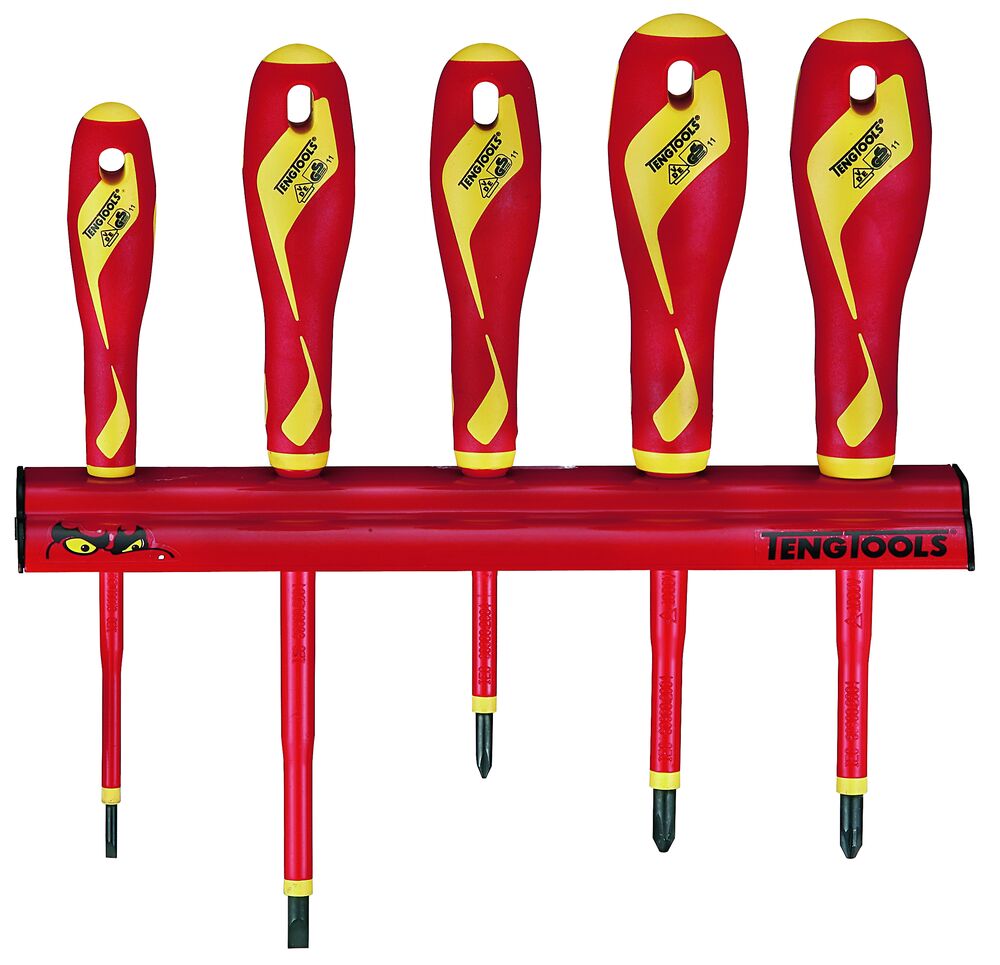
Insulated screwdrivers are non-negotiable, not optional gear. A 1000V-rated insulated screwdriver set protects you if a tool contacts an energized conductor, and most jurisdictions and employers now expect them as baseline PPE for panel work. Nut drivers in common sizes (1/4-inch and 5/16-inch cover most electrical hardware) round out your fastening tools.
Round out the list with a 25-foot tape measure, a torpedo level for boxes and fixtures, a utility knife for cable jacket and insulation, and a basic hammer for driving staples and mounting boxes.
Here’s the priority order if you’re buying on a tight budget:
- Lineman’s pliers (insulated, high-leverage jaws)
- Wire strippers with marked gauge slots
- Insulated flathead and Phillips screwdrivers
- Diagonal cutters
- Needle-nose pliers
- Tape measure
Those six items cost a moderate amount for mid-range quality and cover roughly most of what you’ll do on a residential or light commercial job in your first months. Trade-school programs and contractor checklists consistently point to this same core group as the starting toolkit for apprentice electricians, which tells you it’s not a fad list. It’s what actually gets used.
Pro Tip: Buy your insulated screwdrivers and pliers as a matched set rather than piecemeal. A set like Teng Tools’ insulated screwdriver rack keeps every driver rated to the same standard and stores them in one visible spot, so you’re not hunting through a drawer for the one flathead that’s actually insulated.
Don’t cheap out on the cutting tools. A dull or soft-metal diagonal cutter will slip on 12 AWG copper and either mangle the strand or bite your hand. Mid-range hand tools, the kind built with hardened jaws and proper heat-treated cutting edges, last years longer than bargain-bin versions that dull after a few dozen cuts.
Power Tools Worth Buying and the Battery Platform Question
Once your hand tools are covered, power tools are what separate a slow day from a fast one. You don’t need all of these immediately, but knowing the order matters.
A cordless drill/driver is the first power tool worth owning outright, even if your employer supplies bigger equipment. You’ll use it for mounting boxes, drilling pilot holes, and driving screws faster than any hand driver. An impact driver follows close behind. It handles lag bolts, deck screws, and stubborn fasteners with far less wrist strain than a standard drill.
A reciprocating saw earns its spot for demolition work, cutting through studs, and notching for cable runs. A rotary hammer (SDS) becomes essential once you’re drilling into concrete or block for conduit supports or anchors. A cordless multi-tool with oscillating blades handles the odd jobs, flush cuts, drywall trims, that don’t justify a dedicated saw.
Here’s the buying order that keeps your spending sane:
- Cordless drill/driver with one battery and charger
- Impact driver (often sold as a combo kit with the drill)
- Reciprocating saw once you’re doing rough-in work
- Rotary hammer only when concrete/masonry drilling becomes routine
- Multi-tool as a later convenience buy
The single smartest decision you’ll make on power tools isn’t which brand. It’s picking one battery platform and sticking with it. Every tool that shares a battery type means fewer chargers cluttering your truck, fewer dead batteries mid-job, and lower long-term cost since you’re not rebuying batteries for every new tool. Buy the drill and impact driver as a combo kit with two batteries and one charger, then add tools to that same platform over time.
Budget-wise, expect a few hundred dollars for a decent drill/impact combo kit. Reciprocating saws and rotary hammers cost more, which is why many employers supply these larger tools on commercial jobs rather than expecting apprentices to own them. Ask before you buy: some contractors provide the big stuff and expect you to bring only your hand tools and meter.
Testing and Measurement Tools: What’s Actually Non-Negotiable
This is where corners cannot be cut, and where the core safety and hand tools every electrician must have start with test equipment before anything else.
A non-contact voltage tester (NCVT) is the single most important tool in your entire kit. You use it before you touch anything, every single time, to confirm a circuit is dead. It costs $20 to $40 and there’s no excuse for not carrying one clipped to your pocket at all times.
Next is a digital multimeter. A basic model measures voltage, resistance, and continuity, enough to diagnose most residential and light commercial issues. As you advance, upgrade to a true-RMS multimeter or clamp meter, which reads accurately on the non-sinusoidal waveforms common with variable-frequency drives, LED lighting, and modern electronics. A non-true-RMS meter can give you a wrong reading on exactly the circuits where accuracy matters most.
Pay attention to CAT ratings. A meter rated CAT III or CAT IV is built with internal protection against transient voltage spikes on the circuits you’ll actually work on: panels, feeders, and service equipment. A CAT II meter meant for household electronics testing has no business in your kit once you’re working on live panels.
A receptacle/GFCI tester and a circuit tracer round out the test kit. The receptacle tester is a $10 to $15 tool that confirms proper wiring and ground fault protection in seconds. The circuit tracer earns its cost back the first time it saves you an hour of breaker-flipping guesswork in an unlabeled panel.
Recommended purchase order:
- NCVT (day one, no exceptions)
- Basic digital multimeter (day one or week one)
- Receptacle/GFCI tester (first month)
- True-RMS clamp meter (within the first year)
- Circuit tracer (as your work involves more troubleshooting)
Budget-wise, entry-level meters start around $30 to $60, while professional true-RMS clamp meters with CAT IV ratings run $150 to $300 or more. The gap in accuracy and durability between those tiers is real: a pro-grade meter holds calibration longer and survives drops that would crack a cheaper unit’s display.
Contractor and trade-school toolkit compilations agree on staging this purchase: start with core testers, then add a quality multimeter within the first year as your work moves from basic troubleshooting into diagnostics. Meters also need periodic calibration checks, particularly if you’re using them for compliance-related measurements, so factor that into your ongoing costs rather than treating a meter as a one-time purchase.
PPE and Site Safety Essentials
Your tool choices and your PPE choices are connected. An insulated screwdriver rated for 1000V doesn’t protect you if you’re not also wearing the right gloves and eyewear when the situation calls for it.
Safety glasses are the baseline for every job, full stop, whether you’re drilling, cutting, or just walking a job site. A hard hat is mandatory on most commercial and industrial sites and often required by the general contractor regardless of your own risk assessment. Insulated gloves, rated to the voltage class you’re working near, become necessary any time you’re working on or near energized equipment; these are typically Class 00 or Class 0 for most residential and light commercial voltage. FR (flame-resistant) clothing is required for certain energized work per your employer’s arc-flash policy, and it’s not something to substitute with regular cotton workwear. EH-rated boots provide electrical hazard protection by insulating your feet from ground-fault paths, a detail many apprentices overlook until their first close call.
- Safety glasses (ANSI Z87.1 rated)
- Hard hat (job-site requirement on most commercial work)
- Insulated gloves matched to voltage class
- FR clothing for energized work per employer policy
- EH-rated boots
Employers commonly supply hard hats, FR clothing, and sometimes insulated gloves, since these carry specific liability and compliance requirements tied to the job site. What you typically carry yourself: safety glasses, your own EH-rated boots, and a backup pair of work gloves for general handling.
Inspect insulated gloves and FR clothing before every use, not monthly. A single puncture or tear in an insulated glove voids its protection instantly, and there’s no visual shortcut for checking that beyond a careful look and a stretch test before you put them on.
Get Your Electrician Tool Kit List Organized (Or Waste Hours Looking for Tools)
A great tool kit still fails you if you can’t find what you need in the moment. Practitioners across the trade consistently flag lost or misplaced tools as one of the biggest hidden time-wasters on any job, and the fix isn’t more tools. It’s a system.
Tool pouches work fine for your day-one essentials, the handful of items you touch on every call: pliers, strippers, a screwdriver or two, your NCVT. They’re light, they clip to a belt, and they keep you mobile. Their downside shows up fast once your kit grows past a dozen items: everything gets crammed in loose, and digging for a specific driver bit becomes its own small task.
Modular tool trays with foam cutouts solve that problem directly. Each tool gets a designated slot, so a missing tool is visible at a glance instead of discovered mid-job. Teng Tools’ Get Organized™ system builds around exactly this idea: custom foam trays that click together, so your truck stock and your bench stock share the same visual language. Every socket, plier, and driver has a home, and a quick glance tells you what’s missing before you leave the shop.
Mobile tool panels extend that same logic to your whole rolling kit. Instead of a toolbox where tools sink to the bottom, a mobile panel keeps everything mounted and visible, closer to a pegboard on wheels than a drawer you dig through.
Locking toolboxes matter most for job-site security overnight or on multi-day projects where theft is a real risk, but they don’t solve the find-it-fast problem on their own unless the interior is organized too.
Quick organization checklist:
- On your body: NCVT, one screwdriver, lineman’s pliers, wire strippers, tape measure
- In your pouch: secondary pliers, nut drivers, utility knife, extra fasteners
- On the truck/bench: power tools, meters, PPE reserves, specialty tools in foam trays
Pro Tip: If you’re constantly retracing your steps to grab a forgotten tool, that’s a sorting problem, not a memory problem. Move your three most-used tools to your body pouch and everything else into a labeled tray, and most of that lost time disappears within a week.
Building Your Kit by Career Stage
Buying everything at once isn’t realistic, and it isn’t smart. Spreading purchases across your first two to three years matches spending to what you’re actually doing on the job.
-
Day one (apprentice essentials). NCVT, basic multimeter, lineman’s pliers, diagonal cutters, needle-nose pliers, wire strippers, insulated screwdriver set, tape measure, torpedo level, tool pouch. Expect to spend a few hundred dollars for solid mid-range versions of everything on this list.
-
Next 12 months. Add a cordless drill/impact combo kit, a receptacle/GFCI tester, and upgrade to a true-RMS clamp meter once you’re doing more diagnostic work. This is also when most apprentices add a hammer drill or rotary hammer if their work moves into commercial construction. Budget several hundred dollars during this stretch, spread across several purchases rather than one big spend.
-
Journeyman and beyond. Specialty tools become worth owning once your work demands them specifically: knockout (KO) punch sets for panel work, a torque screwdriver for terminations, conduit benders if you’re running your own bends rather than relying on pre-fab, and motor or industrial testers if you move into commercial or industrial maintenance. A full professional kit, meters, power tools, specialty gear, and hand tools combined, commonly runs into the several-thousand-dollar range over time, though almost none of that is spent at once.
Task-driven additions matter more than blanket upgrades. If you’re not bending your own conduit, a bender sits unused. If you’re doing panel work regularly, a KO punch set pays for itself the first time you need a clean, accurately sized hole instead of a hand-filed one. Buy for the work you’re actually doing this year, not the work you imagine doing five years from now.
Buying Smart: Selection, Maintenance, and Torque Rules
The general rule for hand tools is simple: buy mid-range first, then upgrade specific tools once you know which ones you’re wearing out. A $15 pair of lineman’s pliers that dulls in three months costs you more over a year than a $40 pair that holds an edge. But you don’t need premium-tier everything on day one, since you don’t yet know which tools your specific work will punish hardest.
Meters and insulated tools are the exception to “buy mid-range.” These are safety-critical, and the gap between a bargain NCVT and a reliable one isn’t convenience, it’s whether the tool actually catches a live circuit reliably. Spend more here than you would on, say, a hammer.
Maintenance checklist:
- Inspect insulated tool coatings for nicks or cracks before each use
- Sharpen or replace cutting jaws on pliers once they start crushing instead of cutting cleanly
- Check meter calibration periodically, especially if readings feel off or the meter’s been dropped
- Store insulated tools away from direct sunlight and extreme heat, which degrades insulation over time
- Keep foam trays and pouches dry to prevent rust on exposed metal tools
Torque matters more than most apprentices realize early on. Terminations on breakers, devices, and lugs carry manufacturer torque specs for a reason: undertightened connections loosen and heat up over time, and overtightened ones can crack terminals or strip threads. Carrying a torque screwdriver and actually following the torque values printed on the device or in the panel schedule is increasingly standard practice, and it’s one of the simplest ways to avoid a callback for a loose connection months down the line.
Pro Tip: Keep a small torque reference card taped inside your tool pouch lid with the common torque specs for breakers and devices you install most. It takes ten seconds to check and it beats guessing by feel, even after years on the tools.
Why Organization Beats Accumulation
Most advice on this topic focuses on what to buy. Fewer people talk about what happens after you’ve bought it, and that’s where a lot of electricians actually lose time and money.
The conventional wisdom says more tools make you more capable. In practice, an electrician with fifteen well-organized tools that each have a home outworks one with forty tools buried in a disorganized bag. The fifteen-tool electrician isn’t digging. They’re working. That difference compounds daily, across hundreds of service calls a year.
Staged buying isn’t just a budgeting trick, either. It forces you to learn what your actual work demands before you spend money on tools you might never use heavily. A rotary hammer bought too early sits in a truck bed depreciating while you’re doing residential service work that never touches concrete.
This is where a system like Teng Tools’ Get Organized™ tray platform earns its keep. It’s not just storage, it’s a forcing function: every tool gets a slot, every missing tool becomes obvious, and that visibility alone prevents the slow bleed of lost pliers and misplaced bits that costs working electricians real time every month. Pair that with a lifetime warranty on the tools themselves and same-day shipping when something needs replacing fast, and you’ve got a kit that’s built to be maintained, not just accumulated.
— David
Where Teng Tools Fits Your Kit, Stage by Stage
Teng Tools gives you a direct path from apprentice basics to a fully organized professional setup, without forcing you to piece together mismatched brands as you grow. Each SKU below maps to a specific stage covered in this guide.
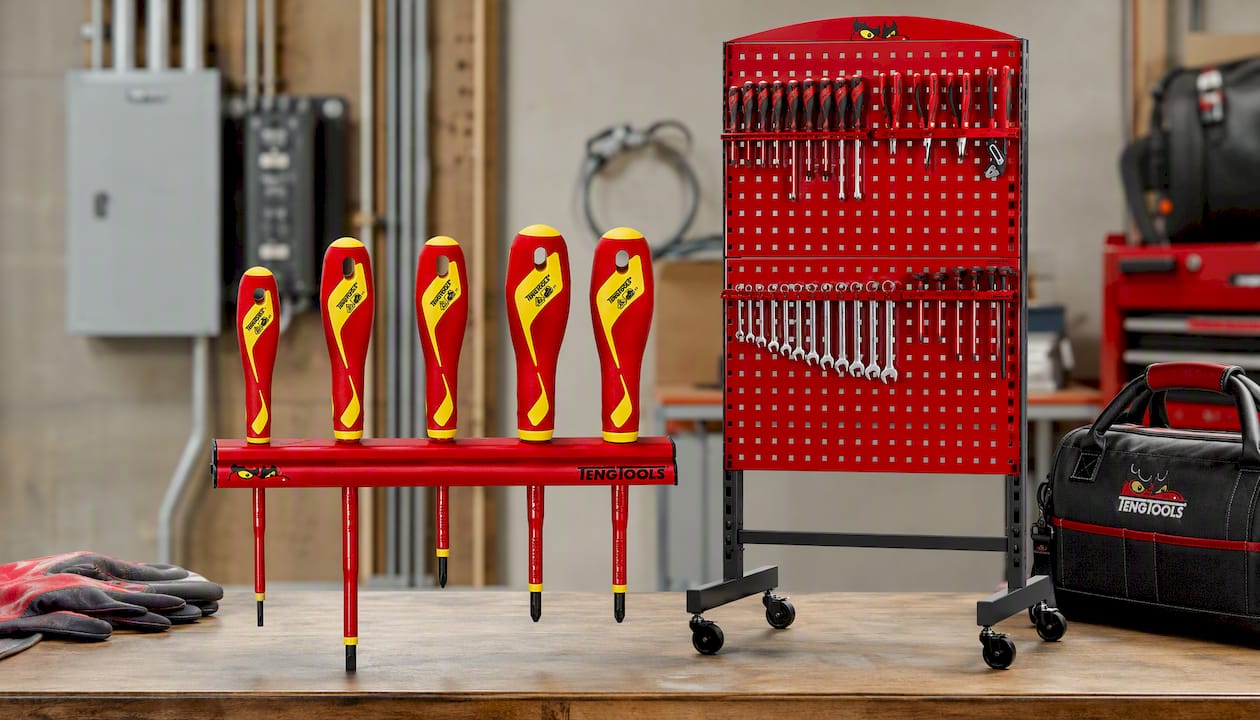
The WRMDV05N insulated screwdriver set is your day-one buy: five insulated drivers on a wall rack that keeps them visible and matched to the same safety rating, exactly what the core hand tools section recommends starting with.
The TTEVX31 insulated socket and pliers set covers the mid-kit upgrade: 31 pieces of insulated sockets and pliers in a foam tray, the kind of combined set that takes you from apprentice basics into journeyman-ready territory without buying tools piecemeal.
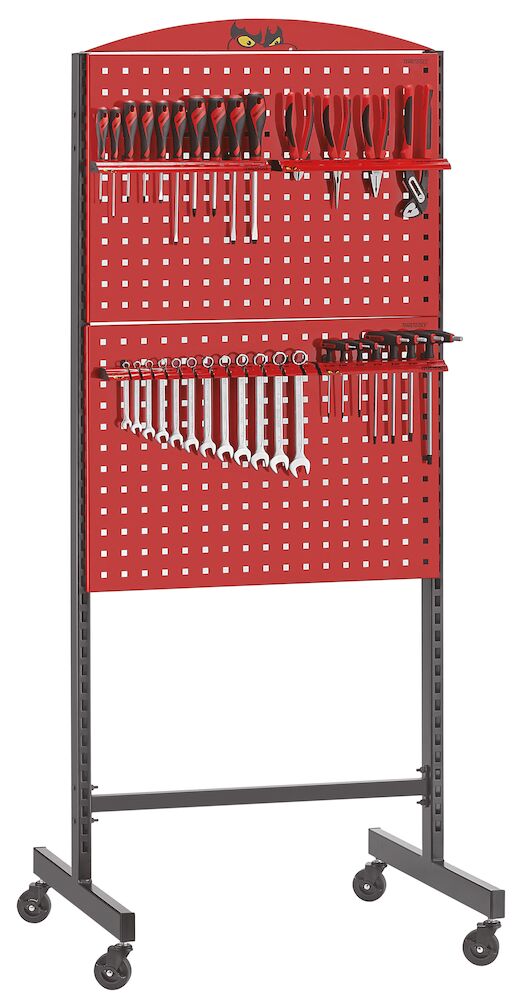
The TPT01 mobile tool panel solves the organization problem directly, with 33 tools mounted on a panel system built around the same Get Organized™ logic covered earlier: a designated spot for every tool, visible at a glance.
All three ship same-day from the Fort Worth, Texas warehouse and carry Teng Tools’ lifetime warranty, so building your kit in stages doesn’t mean waiting weeks between purchases. Start with the screwdriver set if you’re outfitting a day-one kit, or check the mobile panel if disorganization is already costing you time on the truck.
Sources
The recommendations in this guide draw on trade-school and contractor sourced toolkit standards, not guesswork. For deeper reading on any of the categories covered here:
- Apprentice Electrician Tools: The Complete 2026 Checklist — Electrician Authority
- Essential Tools Every Electrician Needs in 2026 — Buildforce
- What tools does an electrician use — Lincoln Tech (apprentice guidance)
- An electrician’s everyday tools — ECMag
FAQ
What tools should every electrician have?
At minimum: a non-contact voltage tester, a multimeter, lineman’s pliers, wire strippers, insulated screwdrivers, diagonal cutters, and needle-nose pliers, plus basic PPE like safety glasses and EH-rated boots.
What are 10 common electrical tools?
Lineman’s pliers, diagonal cutters, needle-nose pliers, wire strippers, insulated screwdrivers, a non-contact voltage tester, a multimeter, a tape measure, a torpedo level, and a cordless drill/driver.
What tools are commonly used by electricians day to day?
Beyond the core hand tools, electricians regularly use a receptacle/GFCI tester, a cordless impact driver, and a torque screwdriver for terminations that require manufacturer-specified torque values.
How much should a starter electrician tool kit cost?
A solid day-one kit with mid-range hand tools and basic testers typically costs a moderate amount, while a full professional kit with premium meters and power tools can reach several thousand dollars over a career.
Do apprentices need to buy their own power tools?
Not always. Many employers supply large equipment like reciprocating saws and rotary hammers, but apprentices are typically expected to own their own hand tools, testers, and often a personal cordless drill/driver.
How do I keep my electrician tools organized on the job?
Use a tool pouch for daily essentials and a modular tray or panel system, like Teng Tools’ Get Organized™ platform, for everything else, so each tool has a visible, designated spot instead of getting lost in a bag.